

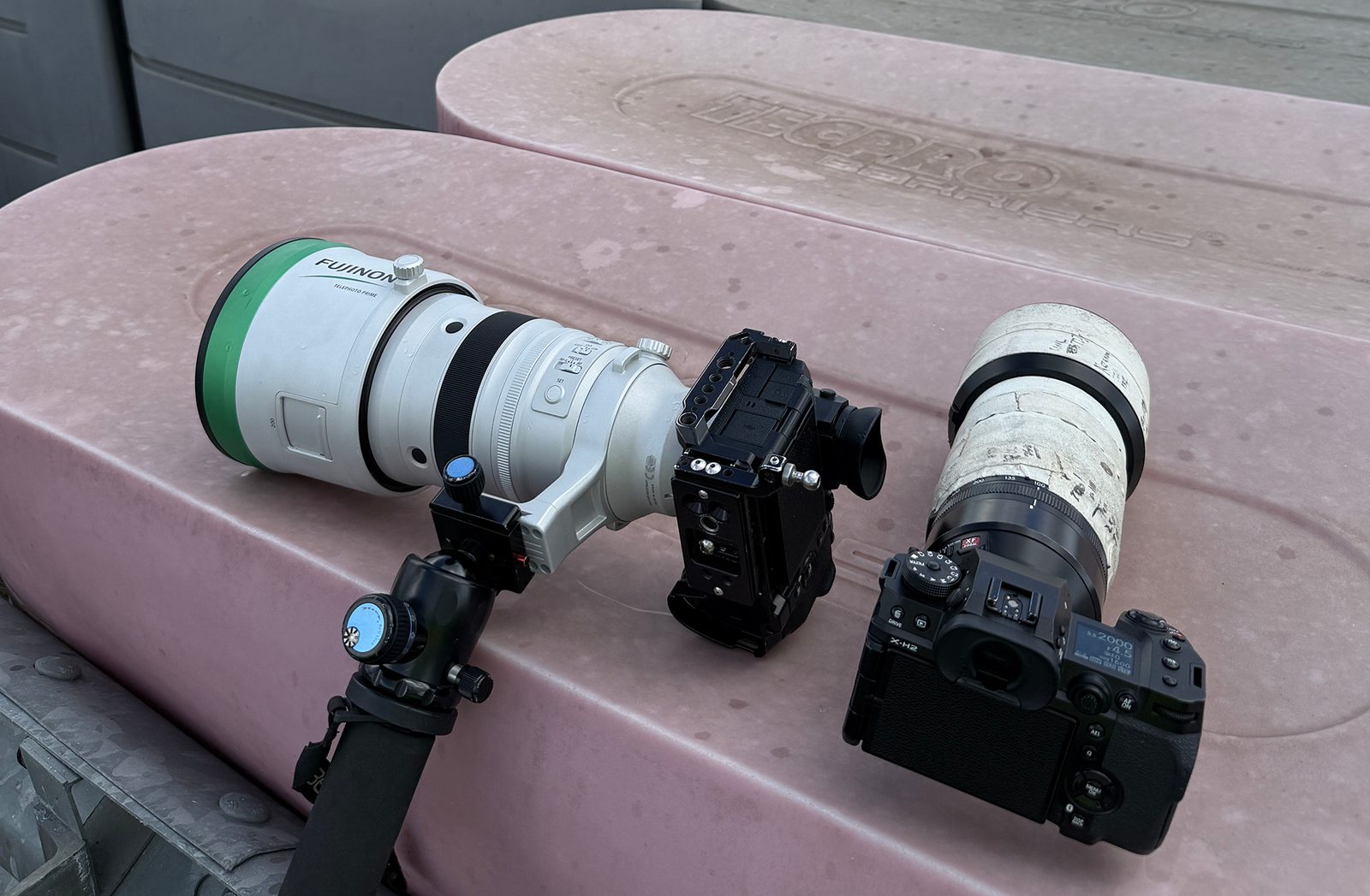
Over the past four years, my work has leaned increasingly toward motorsport photography. With that shift came a growing need for specialty long lenses that could keep pace with speed, distance, and rapidly changing light. My most practical early solution was the Fujifilm XF100–400mm f/4.5–5.6, a lens I still consider indispensable. It remains my default coverage tool when I am trackside at Circuit of the Americas, and it continues to earn its place in my bag.
This article, however, is not about versatility. It is about commitment. Specifically, it is about the absolute beast that is the Fujifilm XF200mm f/2, a lens that has become one of my favorite pieces of glass I have ever worked with, across any system.
Technical Overview and Physical Design
The Fujifilm XF200mm f/2 offers an angle of view equivalent to approximately 305mm on a full-frame system. When paired with the included XF 1.4x TC WR teleconverter, that reach extends to roughly 427mm full-frame equivalent, and the maximum aperture drops to 2.8. Using the teleconverter has no noticeable effect on optical performance or auto-focus performance.
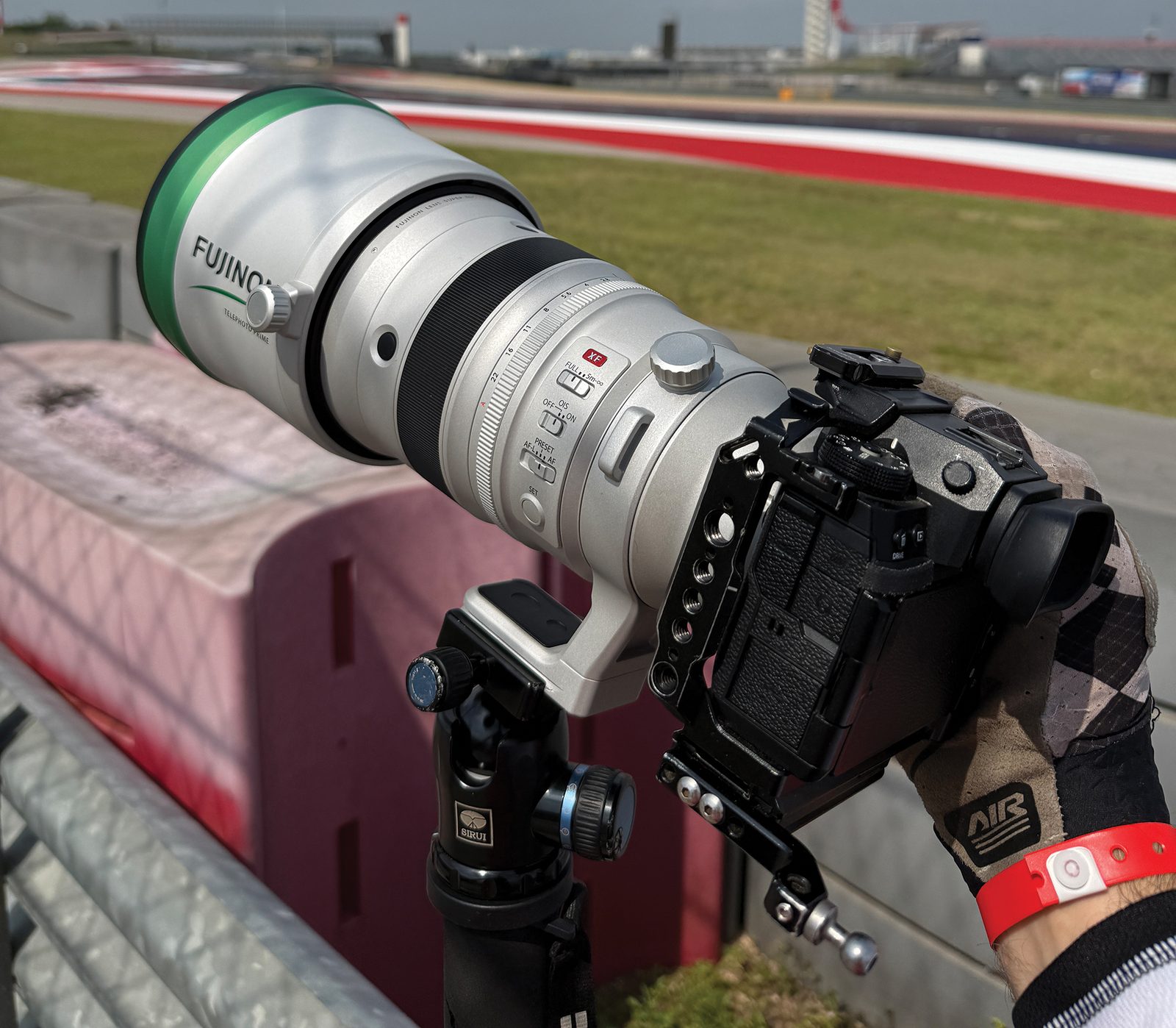
Physically, the lens makes an immediate statement. It features a full-metal construction and is the first Fujinon lens finished with a matte silver coating, a practical choice that minimizes heat absorption and reduces the risk of image degradation during long sessions in direct sunlight. Autofocus is driven by a twin linear motor system that is both fast and nearly silent, while a built-in optical image stabilization system rated at five stops provides meaningful assistance when shooting handheld.
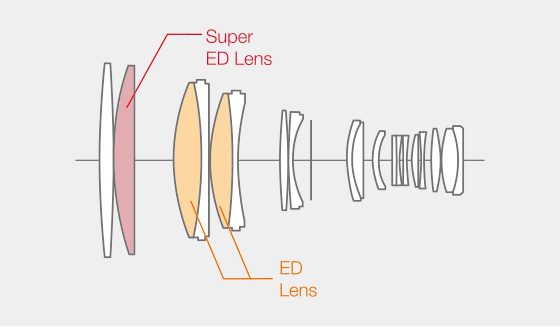
Optically, the XF200mm f/2 reflects a no-compromise design philosophy. The lens is constructed from 19 elements in 14 groups, including one Super ED element and two ED elements to control chromatic aberration. It is fully weather sealed, features a fluorine-coated front element to repel water and dirt, and uses nine rounded aperture blades to produce smooth, circular bokeh. A one-third EV step aperture ring allows precise exposure control, and the integrated rotating tripod collar with strap attachment points underscores the lens’s professional intent.
In the Field: Performance, Pairing, and Personality
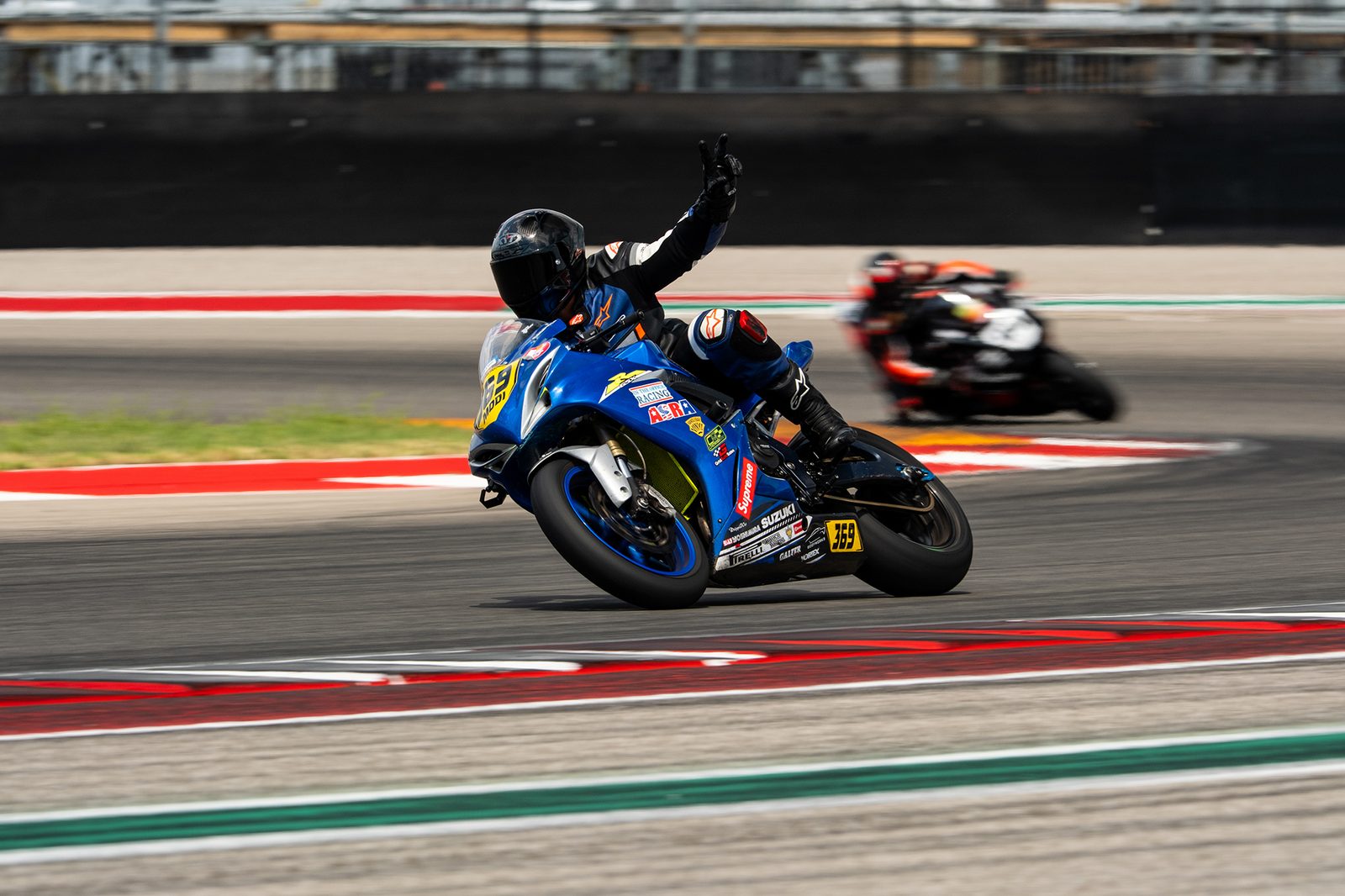
At the track, I shoot exclusively with dual Fujifilm X-H2S bodies, and I do not say this lightly: the XF200mm f/2 paired with the X-H2S represents the most remarkable lens-and-body combination in the Fujifilm X Series. Speed, autofocus reliability, clarity, and sharpness operate at a level that feels effortless. When your subjects are coming at you at triple-digit speeds, missing the shot is not an option.

I have used the XF200mm f/2 on the X-H2 as well, and while the results were absolutely usable, autofocus acquisition and consistency were noticeably better on the X-H2S. For fast-moving subjects and unpredictable moments, that difference matters.

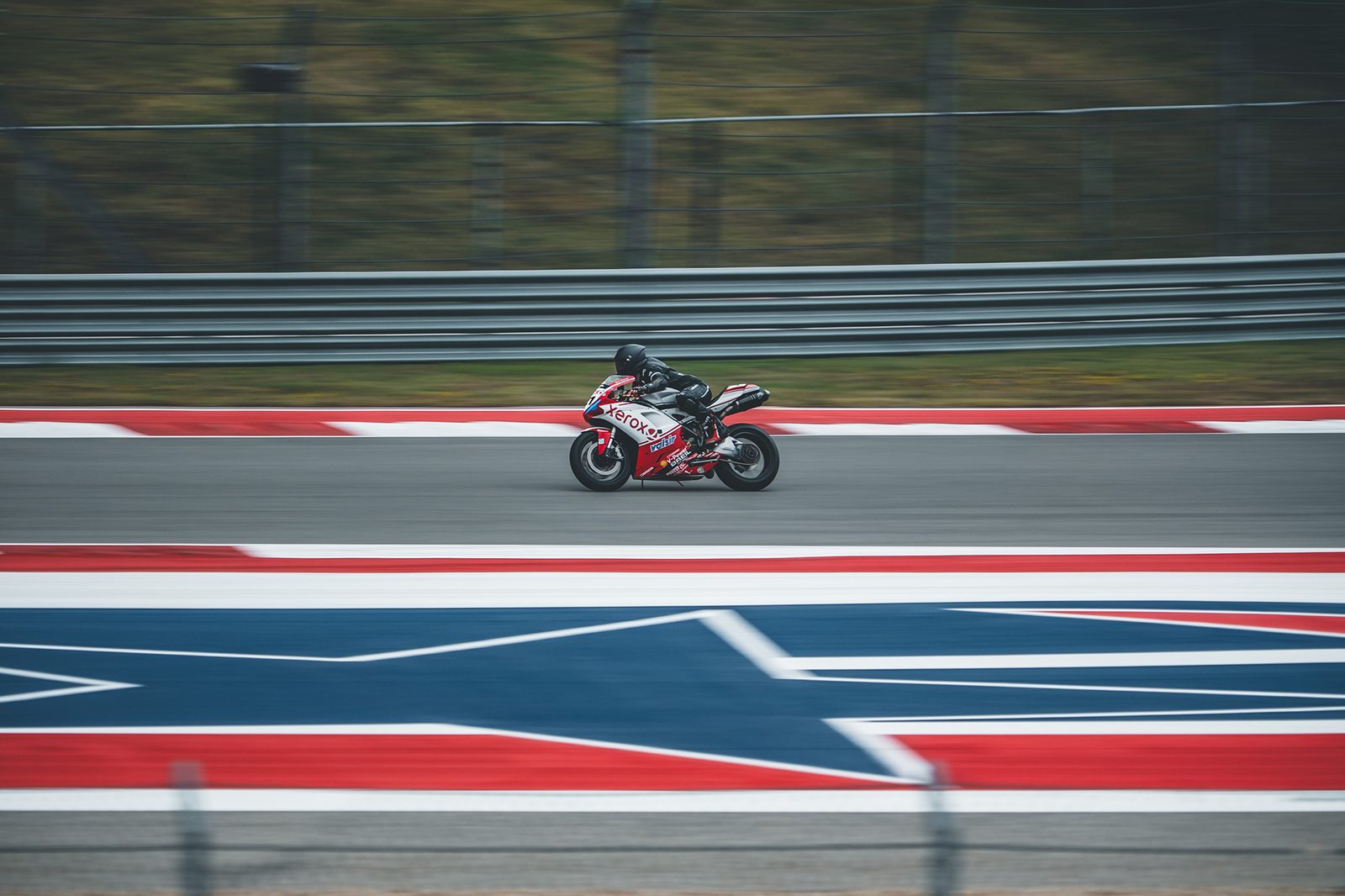
There is also an acclimation period with this lens. When I first began shooting with it, I spent about an hour identifying my preferred vantage points and adjusting to the discipline of working with a dedicated long prime. Once that rhythm settled in, the experience became addictive. During slower moments between on-track action, I would review images and find myself audibly reacting to what I saw. The separation between subject and background is exceptional. Wide open at f/2, the bokeh is rich and creamy, while the subject remains critically sharp.
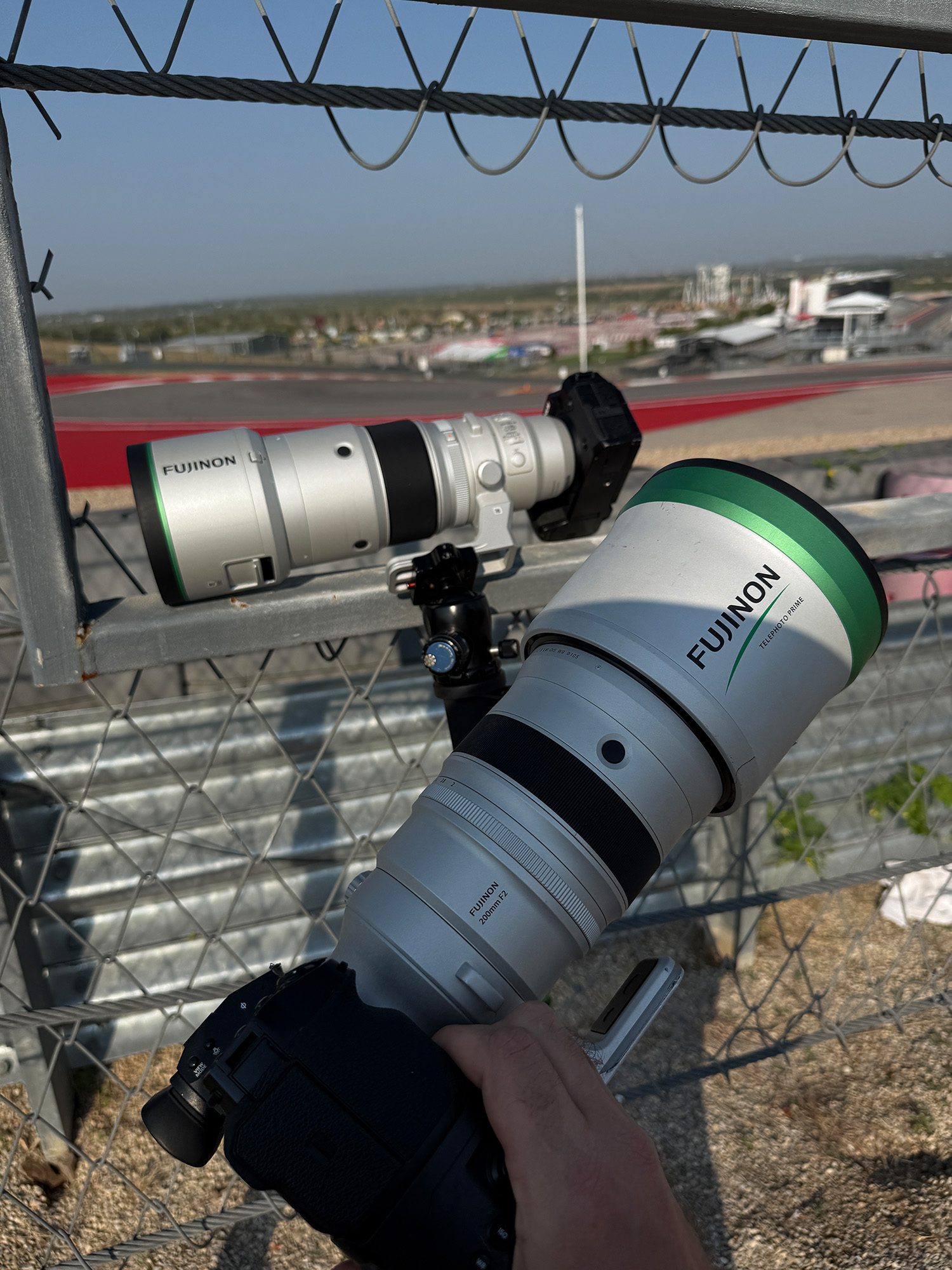
Several design details stand out in daily use. The programmable autofocus buttons on the barrel are genuinely useful, especially when shooting handheld, providing another stable point of interaction. The lens hood is equally impressive: large, rigid, and secured with a pressure screw. When working with a monopod, I often cup the edge of the hood, a technique familiar to many professional motorsport photographers.

Practical Considerations and Tradeoffs
While a monopod is not strictly necessary, it becomes a welcome companion during long shooting days. The XF200mm f/2 weighs approximately 2,265 grams, which is manageable but far from light. After a full day of handheld shooting combined with speed panning, the strain is real, and your shoulder will make its opinion known.

Another practical consideration is the massive front element, which requires dedicated 105mm filters. Given that the lens retails around $6,000 new, this is not a small additional investment. I opted to build a small filter kit early on, including a UV filter for constant protection, a circular polarizer for bright trackside conditions, and a 32-stop variable neutral density filter to allow wide-open shooting in intense daylight.
Who This Lens Is For
Most reviews of this lens will touch on commercial and wildlife genres of photography. I have found a few regarding motorsport photographers. With that said, this is what I would call an umami lens. It offers an unparalleled and stunning flavor to your images, not obtained with other lenses in the Fujifilm lineup. The XF200mm will not be your first purchase, and it is not your most flexible. Instead, it becomes the third essential lens in your kit, the one you reach for whenever conditions allow. When flexibility is required in the paddock or trackside, the XF50–140mm f/2.8 or XF100–400mm f/4.5–5.6 will do the heavy lifting. When light drops, backgrounds matter, and absolute clarity is the priority, the XF200mm f/2 is the heavyweight champion.
Do you need this lens? No. Would you regret owning it? Absolutely not. Now that it is part of my kit, I cannot imagine selling it. I use it often enough that it has become indispensable, and for professional Fujifilm shooters working in motorsports, it represents the pinnacle of what the system can offer.