

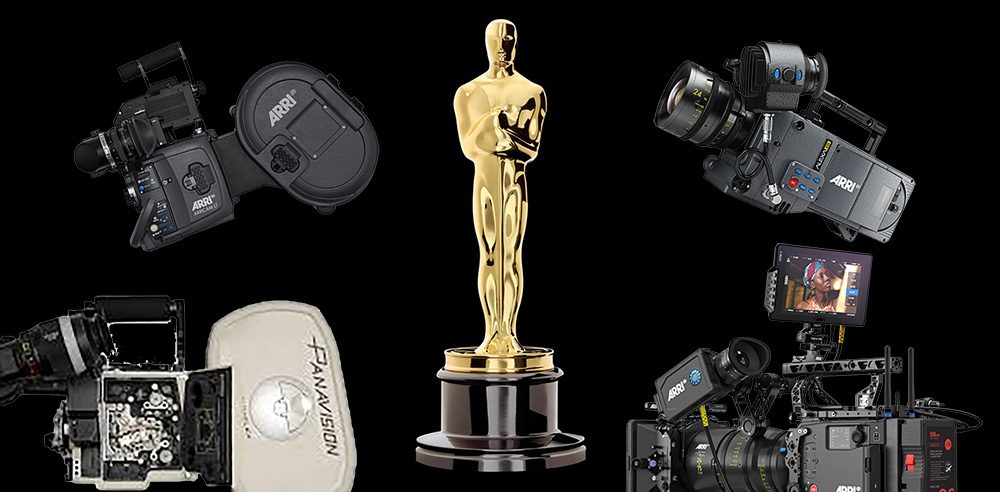
The 98th annual Academy Awards were this past weekend. Highlighting some of this past year’s best in film, we had a lot of really great films for the year, and some of the best cinematography in years. As you may have noticed, I’ve become quite a film and TV buff over the past few years, and have had a lot of fun deducing how iconic shots were filmed and the tools they used to create these memorable moments. With the award season ending, I thought it would be fun to go through this year’s nominees and winners and look at the gear they used to create their masterpieces. So let’s dive into it.
Bugonia
Cameras Used: Vistavision Wilcam W-11 & ARRIFLEX 435 & 435 HS
Yorgos Lanthimos’s Bugonia continues his collaboration with cinematographer Robbie Ryan, favoring a visual language that mirrors the film’s themes of obsession and paranoia. Along with their history with projects like Poor Things and The Favourite, the cinematography utilizes extreme wide-angle and fisheye lenses to create a distorted, claustrophobic sense of reality. An expert level of filmmaking that makes you question your own reality in a fun and quirky way.
F1
Cameras Used: Sony Venice 2, Carmen (Custom Prototype), DJI Ronin 4D
The cinematography of F1 represents a massive leap in practical action filmmaking, led by Oscar-winning cinematographer Claudio Miranda. Building on the techniques they pioneered for Top Gun: Maverick, the production favored mounting real cameras to custom-modified Formula 2 cars driven by Brad Pitt and Damson Idris at speeds exceeding 150 mph. To achieve this without compromising the car’s aerodynamics or the driver’s visibility, Miranda collaborated with Sony to develop “Carmen”—a bespoke, miniaturized 6K sensor-on-a-stick prototype that is approximately a quarter of the size of a standard cinema camera.
These high-tech rigs were distributed across the car’s “halo” and chassis, providing up to seven simultaneous angles and full remote-controlled pan and tilt, resulting in some pretty spectacular cinematography.
Hamnet
Cameras Used: ARRI Alexa 35
Chloé Zhao’s Hamnet features a strikingly intimate visual language crafted by cinematographer Lukasz Zal, known for his Academy Award-nominated work on Ida and Cold War. The cinematography here embraces a “ghost camera” perspective—an observational, drifting lens described as “death’s point of view” — scanning scenes with a quiet, non-judgmental weight.
Frankenstein
Cameras Used: ARRI Alexa 65
In Guillermo del Toro’s Frankenstein, cinematographer Dan Laustsen uses a sweeping, large-format visual style to modernize the gothic horror aesthetic. Shot entirely on the ARRI ALEXA 65 with Leitz THALIA 65 lenses, the film relies heavily on a 24mm wide-angle lens for nearly 90% of its shots. To soften the digital sharpness, Laustsen utilized custom Black Pro-Mist diffusion filters placed behind the lens, which “burns out” highlights while preserving the deep, rich blacks essential to the film’s moody atmosphere.
Marty Supreme
Cameras Used: Arricam LT, ST, SR, Bolex
In Josh Safdie’s Marty Supreme, cinematographer Darius Khondji disregards modern digital aesthetics for a richly textured, “painterly” 35mm look. Shot primarily on Arricam LT and ST cameras using Kodak Vision3 500T film, the production utilized vintage Panavision B and C Series anamorphic lenses. Khondji’s visual strategy centers on tight telephoto shots, using exceptionally long lenses (up to 360mm) to capture suffocating, expressive close-ups of Timothée Chalamet. This telephoto approach creates a shallow depth of field that isolates Marty from his environment, making him appear “larger than life” while simulating the observational feel of his challenges in the table tennis world.
One Battle After Another
Cameras Used: Beaumont Vistavision, Panavision Millennium XL2
My personal favorite on this list, One Battle After Another, revives the VistaVision format to capture a gritty, 1970s-inspired political thriller. Using a 1.50:1 aspect ratio, the film is shot with large negative spacing throughout, inspired by the 1970s classic The French Connection. To achieve a specific texture, Panavision’s Dan Sasaki developed a custom set of prototype spherical lenses (dubbed “GWs”) designed to emulate the optical characteristics of the glass used by legendary cinematographer Gordon Willis (The Godfather Part II, All the President’s Men). Highlighting detailed California landscapes with suffocating, long-lens close-ups, One Battle After Another makes you feel like you’re watching a modern masterpiece that also feels like a classic from the ’70s or 80s.
Train Dreams
Cameras Used: ARRI Alexa 35
In Train Dreams, cinematographer Adolpho Veloso crafts a visual language rooted in “photographic memory,” utilizing a rare 3:2 aspect ratio to evoke the feel of vintage still portraits from the early 20th century. The film was shot digitally on the ARRI Alexa 35, using almost exclusively natural light, and real campfires and candles as lighting to give the film a textured, more organic feel.
Sentimental Value
Cameras Used: ARRICAM Lt 35mm
In Joachim Trier’s Sentimental Value (2025), cinematographer Kasper Tuxen uses a dual-format visual strategy to navigate the film’s themes of memory, family, and reconciliation. The narrative is captured on 35mm Kodak film using the Arricam LT and Cooke 5/i lenses. To distinguish the film-within-a-film and historical flashbacks, the production shifted to 16mm and added bleach bypass, giving the film a crustier, older look.
Secret Agent
Cameras Used: ARRI Alexa 35
In The Secret Agent, cinematographer Evgenia Alexandrova uses a vibrant palette to render the oppressive atmosphere of 1970s Brazil. Shot primarily on the ARRI Alexa 35 and paired with vintage Panavision B Series anamorphic lenses, the cinematography leans into a “360-degree” philosophy, utilizing wide shots that capture the historical textures of Recife and São Paulo. Alexandrova also uses saturated primary colors and a distinctive reddish undertone in the shadows to create a “woozy,” nostalgic heat.
Sinners
Cameras Used: IMAX MSM 9802, MKIV, Panavision System 65
In Ryan Coogler’s Sinners, cinematographer Autumn Durald Arkapaw crafts a gothic aesthetic that anchors supernatural horror in a tangible, historical reality. Shot entirely on IMAX-certified digital cameras with custom-tuned Panavision Specho spherical lenses, the film utilizes an ultra-wide 1.43:1 aspect ratio for its most sequence-heavy moments, creating a sense of “towering dread” in the early 1900s South. Durald Arkapaw’s lighting strategy avoids the “Hollywood blue” of typical night scenes, opting instead for a “true black” philosophy in which characters are often silhouetted against firelight or the harsh, singular glare of period-accurate lanterns. This high-contrast approach creates an effect that visually separates the twin protagonists from the shadows that seemingly house the film’s monstrous threats. The stark contrast between the subjects and their scenes creates an uneasiness that sits throughout the entire film.
So what was your favorite movie of the past year? Did any movie not mentioned really surprise you with its cinematography? Feel free to chime in using the comments below.
Sources – American Cinematographer, Letiz-Cine, MotionPictures.org, Kodak