
Some projects throw you a curveball right when you think you have everything figured out. Midway through a convention shoot, my client asked if we could add some “Glambot” style shots to the day, followed by quick person-on-the-street interviews with attendees. Two very different things to pull off back-to-back, but that is honestly the part of this job I enjoy the most.
For anyone unfamiliar, Glambot shots are what you see at the Oscars or the Emmys, a high-speed camera mounted on a robotic arm that moves through a pre-programmed sequence with incredible precision. The results are stunning. Renting an actual Glambot was obviously not in the cards for this budget, so I had to think through a practical alternative. The answer turned out to be pretty straightforward: a camera on a gimbal and a lot of light.
Ready for Your Close-Up
High-speed shooting has a few technical hurdles you need to clear before you even think about pressing record. For me on this shoot, the two big ones were lighting and focus.
The exposure math on high speed is pretty simple once it clicks. Your shutter speed needs to be at least double whatever frame rate you are shooting at. I was on the Sony FX3 running 120 fps in 4K, so 1/240 of a second was my number. Set that, and your slow-motion footage feels natural and cinematic in a 24 fps timeline. If you go over or lower, the footage will either look too choppy or will have too much motion blur.
Focus was the trickier piece. A real Glambot has the luxury of pre-programmed focus pulling built right into its motion path. Without that, and without a dedicated focus puller on set, I landed on shooting at around f/8. That gave me enough depth of field to stay sharp as I pushed the camera in toward the subject, which is the whole point of the shot. Stopping down that far meant I needed serious light.
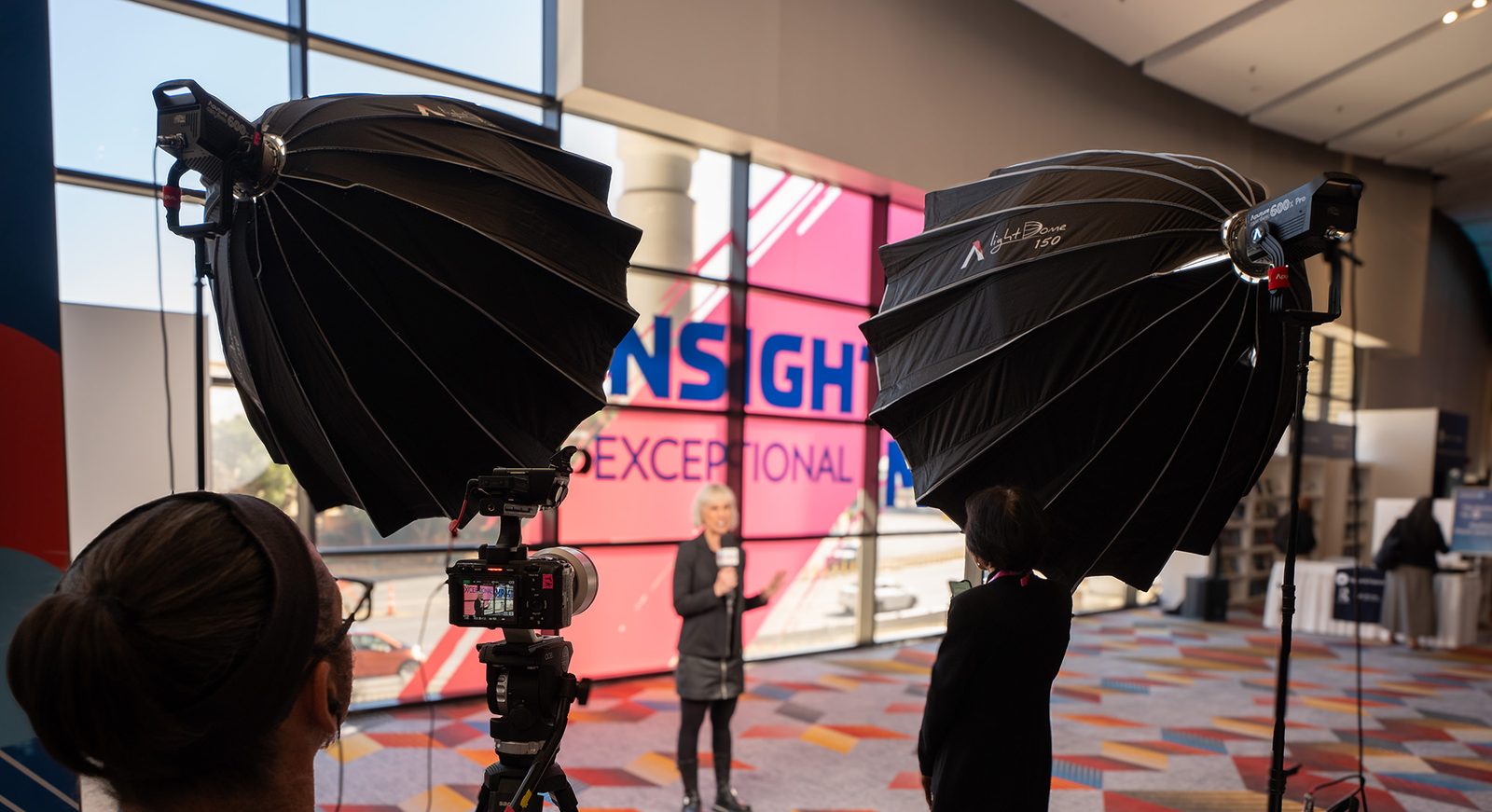
Two Aputure LS 600x lights with the 60-inch Light Dome 150 softboxes, and I had all the firepower I needed. Honestly, those lights never let me down in a pinch. Gimbal-wise, I strapped the Sony FX3 onto a DJI Ronin RS4 Pro with Tilta dual handles, which was the right move. Single-handed push toward a subject gets shaky in a hurry. The second handle just gives you that extra bit of control, keeping the whole thing from looking like a nervous camera operator instead of an intentional move.
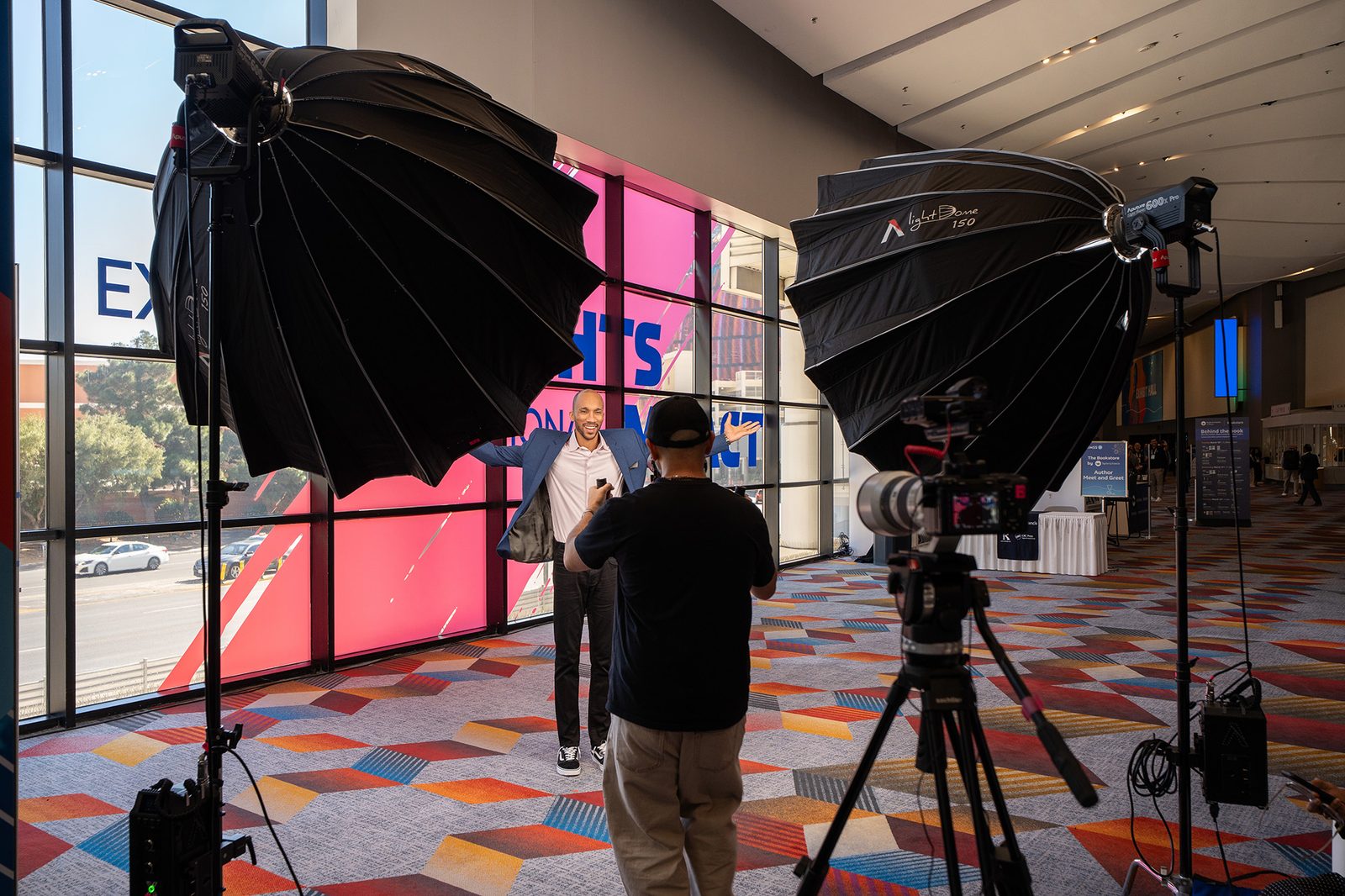
A few practice runs before the subject steps in, and you can get pretty close to that Glambot energy. Not the real thing, obviously, but on screen it reads a lot better than you might expect.
Can We Ask You a Few Questions
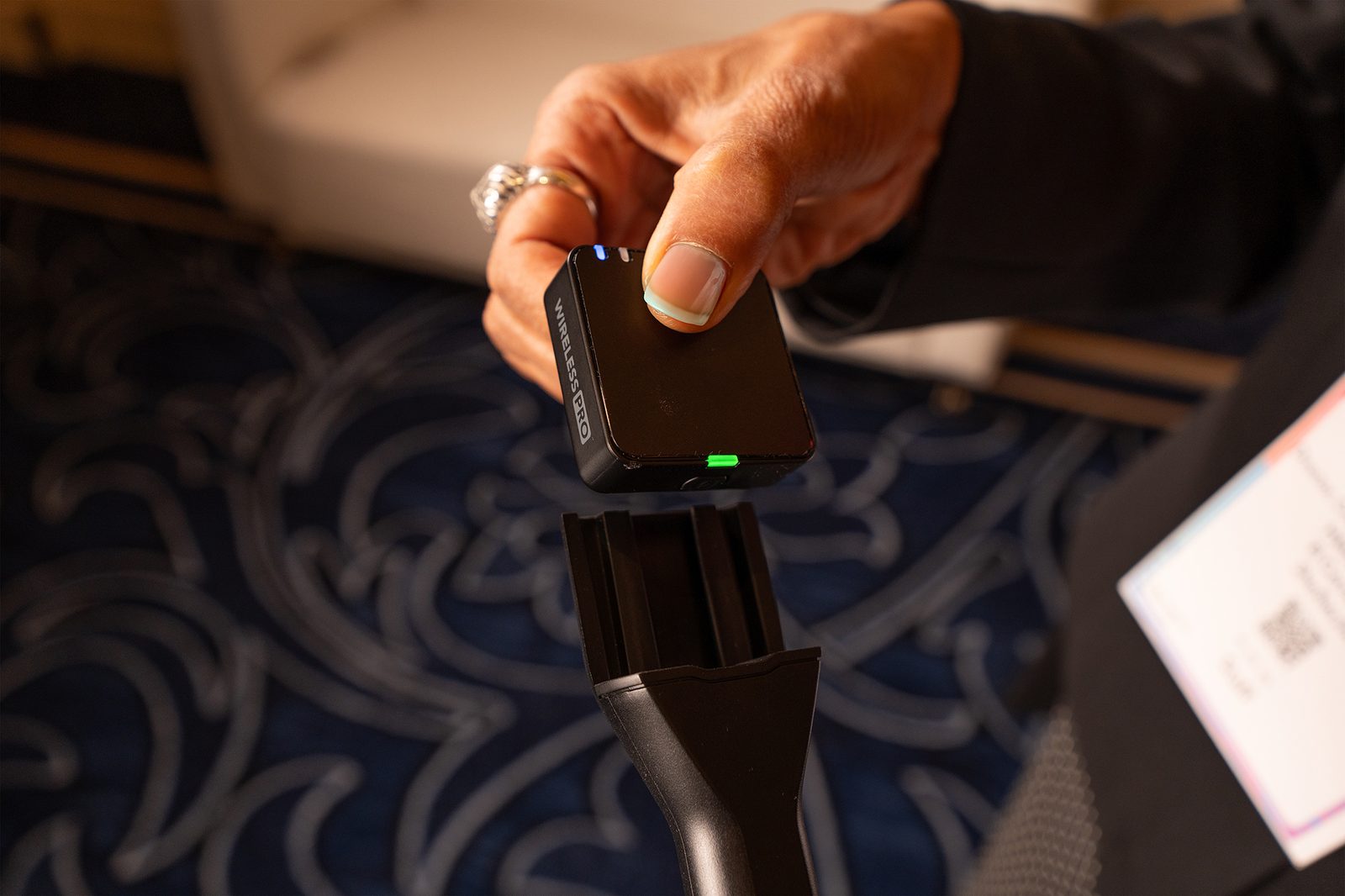
Once the glam shots were wrapped, we shifted into interview mode. A second Sony FX3 went on a tripod, Rode Wireless Pro system patched in, and I grabbed the Rode Interview GO Handheld Mic Adapter for the actual interviews. Five minutes per attendee doesn’t leave much time for fussing with gear, so being able to snap a transmitter onto the adapter and hand the whole thing to the subject was a lifesaver. Clean, fast, no awkward clipping or cable wrangling.
The lens used was the Sony 70-200mm f/4, and honestly, the longer focal length was less about the image and more about the people. A lot of these attendees were not used to being on camera, so some of them visibly tensed up the moment they saw the camera. Keeping some physical distance between them and the lens helped take the edge off. People loosen up when they do not feel like something is right in their face, and once they loosen up, the conversation gets a lot more interesting.
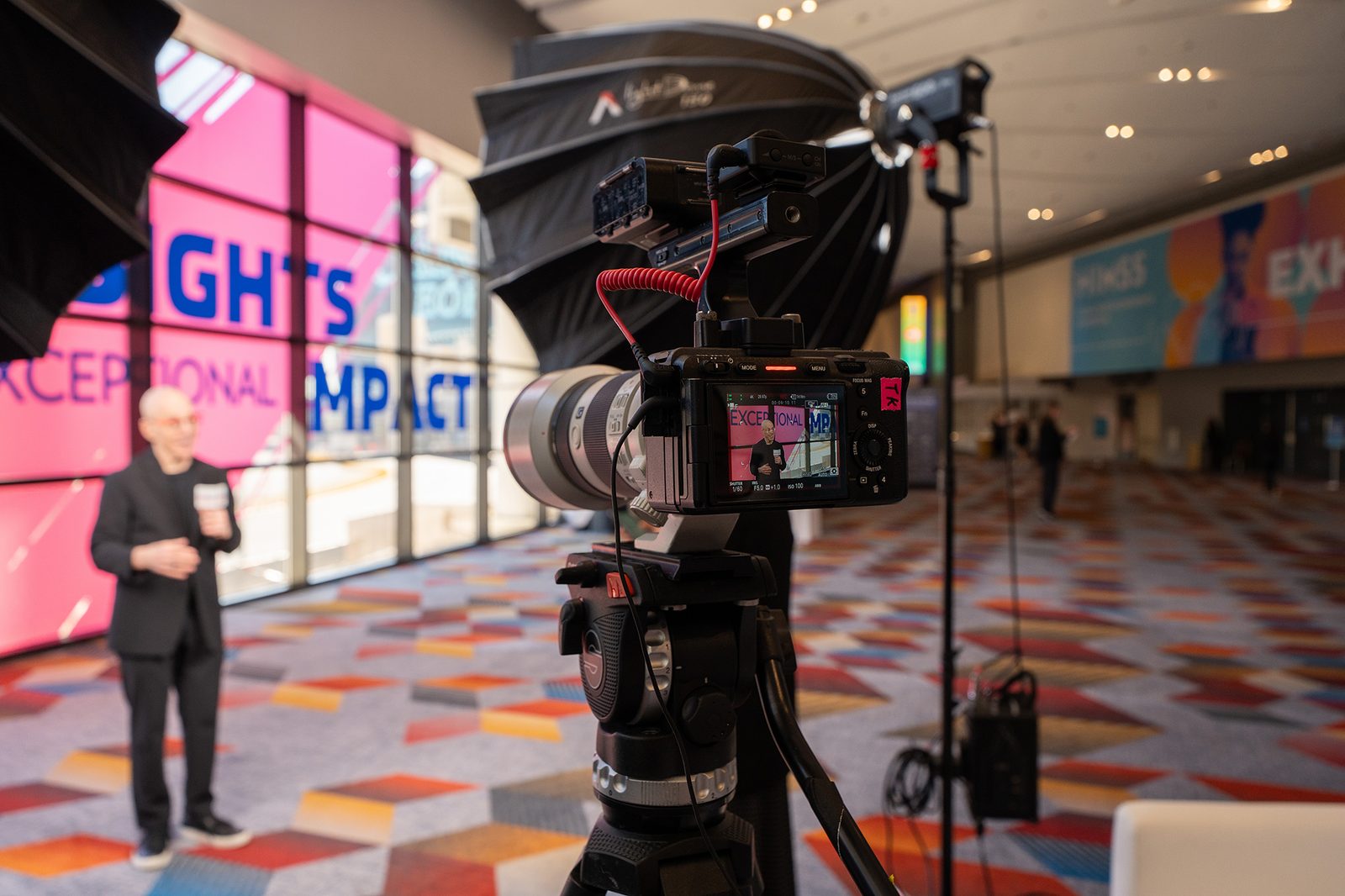
Ultimately, success on a shoot like this doesn’t come from having the most expensive robotic rig or a massive crew; it comes from adaptability and knowing how to maximize the tools you have on hand. Whether it was mimicking high-end cinema tech with a gimbal and extra light stops or using a longer lens to help an interview subject feel at ease, the goal remained the same: capturing the energy of the moment without the gear getting in the way. It was a hectic shift from high-fashion flair to run-and-gun journalism, but that’s the beauty of production—when you’re prepared for the curveballs, the results usually speak for themselves.
And while not trying to do a sales pitch for Lensrentals.com on their own website, the ability to order the gear needed and have it arrive at my hotel the day before a shoot made the process that much easier. By preparing for everything and using gear that exceeded the needs of the intended shoot, I was able to be adaptable and capture everything my client needed.