
Sony FE 90mm f/2.8 G OSS Resolution Test
We got a pre-release set of Sony FE 90mm f/2.8 G OSS Macro lenses in for preliminary testing last week, and I was kind of excited about this lens for a couple of reasons. First it simply gives me a nice short telephoto prime option that has been lacking in the lineup (although the Zeiss 85mm Batis lens will be coming along fairly soon). Second, it gives me a true macro lens at the focal length I prefer.
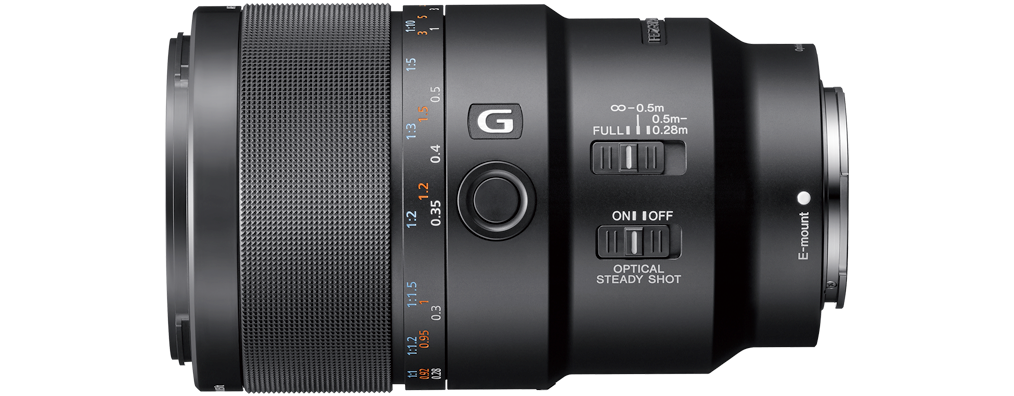
I hoped that the combination of a good macro lens with the A7r sensor would turn out to be a winner. We used our Imatest lab to compare Sony 90mm f/2.8 G OSS lenses mounted to Sony A7r cameras, and compared them with Canon 100mm f/2.8 IS Macro lenses shot on Canon 5DIII cameras in our Imatest lab. (For those who are curious, we can’t test Sony E mount lenses on an optical bench because the electromagnetic focus system requires electrical power to operate. Until we do some really geeky, overly complex engineering modifications, the optical bench isn’t an option for Sony E mount lenses.) It would have been nice to also compare with a Nikon D810 and Nikon 105 f/2.8 Micro lens, I know, but our time is limited.
Overview of the 90mm f/2.8 G OSS
First of all, if you’re used to Sony E mount lenses being smaller than their SLR counterparts, you’ll need to get over that. The 90mm lens is very similar in size to the Canon 100mm f/2.8 IS and other SLR macro lenses in this focal range.
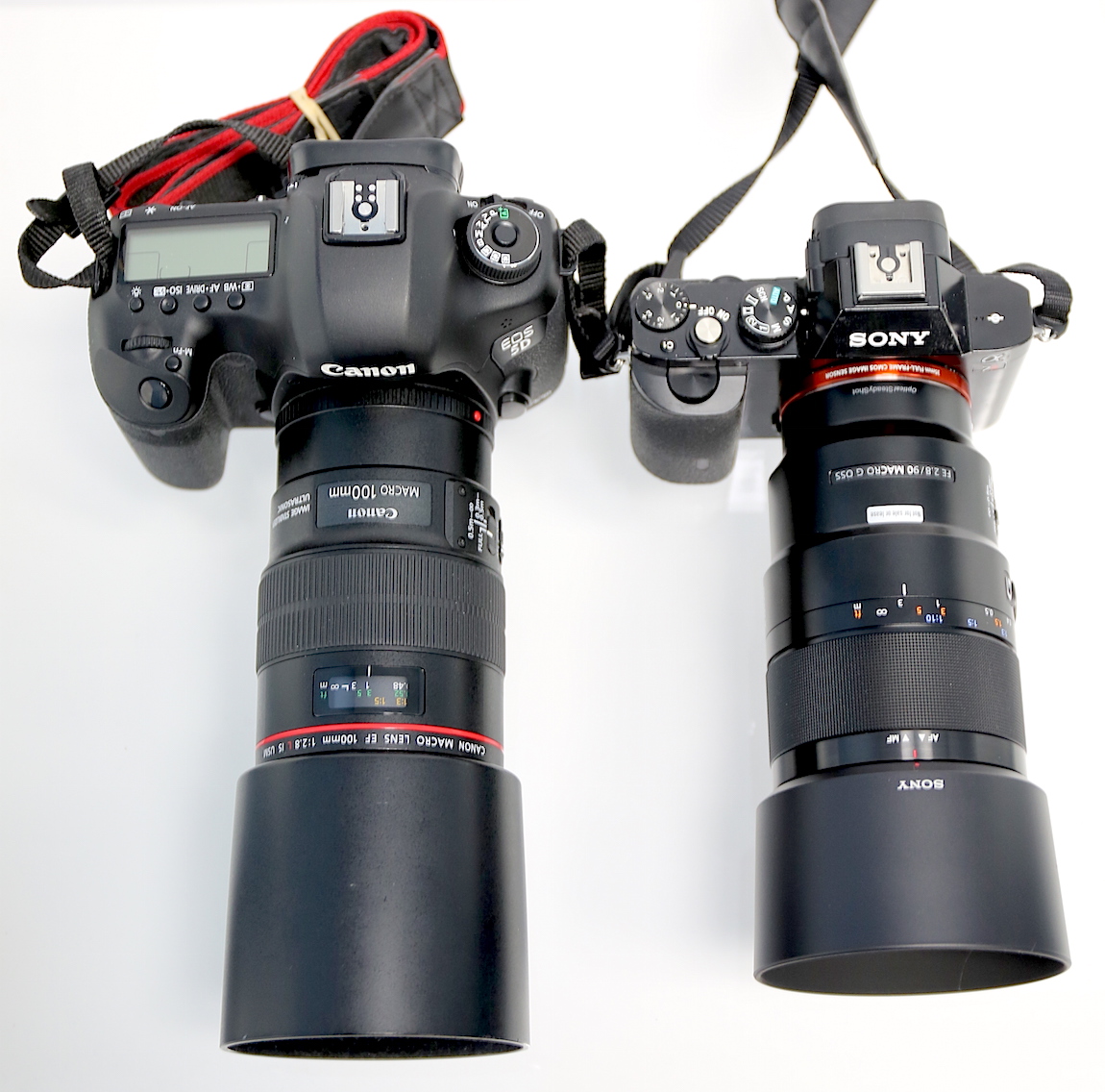
If you’d like the numbers for comparison, I’ve put them in a table.
| Sony 90mm f/2.8 OSS | Canon 100mm f/2.8 IS L | Nikon 105mm f/2.8 Micro VR | |
|---|---|---|---|
| Price | $1,098 | $899 | $879 |
| Weight (lb.) | 1.32 | 1.38 | 1.58 |
| Length (in.) | 5.14 | 4.84 | 4.9 |
| Filter size (mm) | 62 | 67 | 62 |
| Min. Focus Dist. (in.) | 11 | 12 | 12 |
| Aperture Blades | 9 | 9 | 9 |
| Elements/Groups | 15/11 | 15/12 | 14/12 |
The Sony is a bit more expensive, but that’s not unusual for a new release. Otherwise they are pretty similar in specifications.
Test Results
We tested these in our Imatest lab but at two different focusing distances and with two different charts. Remember, the higher resolution of the A7r camera will make the system resolution higher. My thinking when making this comparison was if the Sony lens wasn’t up to the standards of the Canon (which is arguably the best macro lens in this focus range), then the Canon system would be close to the Sony, despite the higher resolution of the Sony camera.
The tables below shows the MTF 50 results averaged for 6 samples each of the Sony 90mm f/2.8 OSS on a Sony A7r compared with 6 samples of the Canon 100mm f/2.8 IS L on a 5D Mark III.
Our first test was using a standard Imatest setup shot at a distance of about 20 feet.
| Canon 100mm f/2.8 IS L | Sony 90mm f/2.8 G OSS | |
|---|---|---|
| Center | 1580 lp/ih | 2300 lp/ih |
| Average | 1340 lp/ih | 1665 lp/ih |
| 4 Corner avg. | 1125 lp/ih | 1210 lp/ih |
We then repeated the tests, using a high-resolution, back lit chart made by Imatest specifically for testing macro lenses. The focusing distance was now just under 2 feet. This doesn’t give us quite full 1:1 macro working distance, but it’s pretty close.
| Canon 100mm f/2.8 IS L | Sony 90mm f/2.8 G OSS | |
|---|---|---|
| Center | 1540 lp/ih | 2210 lp/ih |
| Average | 1290 lp/ih | 1765 lp/ih |
| 4 Corner avg. | 1105 lp/ih | 1380 lp/ih |
At both focusing distances the Sony system is clearly out resolving the Canon system. We would expect that, to some degree, given the higher resolution Sony sensor. But the difference was, quite frankly, surprising to me. It would seem to indicate the new Sony 90mm Macro lens performs at least as well as the Canon 100mm f/2.8 IS L, from a resolution standpoint, anyway.
Summary
Please don’t take this out of context. These are simply Imatest MTF50 numbers. By that standard the new Sony 90mm f/2.8 G OSS Macro seems to be a superb addition to the E mount lineup, and the lens on an A7r should provide superb resolution. We’ll have to look at more in-depth, hands on reviews to see how it actually performs in the field, what the bokeh looks like, how well the OSS performs and a host of other factors to decide how great (or not) the lens performs in the real world. But these preliminary results look very good.
Roger Cicala and Aaron Closz
Lensrentals.com
April, 2015
60 Comments
Mike ·
Wish you would have adapted the 100L to the A7R. Then we’ll truely know if they are equal in performance or not
Roger Cicala ·
Mike and William, except we wouldn’t know if the adapter deteriorated the performance or not. I’ve tried it before and each copy of the lens-camera combination has to be tried on a number of adapters to find one without tilt for that lens. And an adapter that works on lens A probably won’t on Lenses B, C, D, and E. Not the kind of thing I have time to do.
William Jaeger ·
Is it unreasonable to test the Canon 100mm on the Sony A7r with an adapter? That would be what most A7 users would want to know–whether to buy the Sony or the Canon (or the Nikonf or that matter)…since all will “work” on the Sony.
Love your comments, always.
Eric ·
In the earlier announcements, Sony said that the 90 Macro would have a real mechanical focus ring enabled from the front clutch. Is it actually fly-by-wire then ?
Tim Parkin ·
I agree with William Jaeger – a side by side on the same sensor would be very interesting..
Weilli ·
The resolution of Sony G90/2.8 in the 4 corners increased in the short focusing distance. Is it normal?
Weilli ·
I recall that Roger has ever said that the precision of the adaptors would affect the results of the comparison, so I don’t know if it is the reason Roger doesn’t prefer to do that.
Steve Bingham ·
Roger,
First, let me thank you for the excellent data! Now, can you explain a little further what you mean by “average of 6 samples”? Were both cameras using f2.8? Are you talking center MTF, or a combination of edge, 1/2 out, and center? Or something else? Having this information would better enable me to compare Sony’s 55mm TESTED f1.8 MTF figures (which are excellent).
I did find the 20′ verses macro most enlightening. I’ll bet it answers a really big question for many of us.
Roger Cicala ·
Steve, every point is the average of the 6 copies for that value: center, overall average corner average.
lisandra ·
I know youll hate it, and me for also asking, but i also vote for a side by side on the a7r. Adapters suck, but we all use them!!!
All kidding aside i think once on the a7r with a half decent adapter the canon will outresolve the sony.
Ok now i reeeeeeaaally HAVE to know
Roger Cicala ·
Lisandra, they don’t suck too much for photography, but they suck a lot for lens testing.
Kiril ·
I wonder if the 36 vs 22 MP may be the reason to see difference between these lenses.
Do you believe same test with A7 II would yeild less compelling result? or would using the upcomming 5DS R reverse the result in favour of Canon.
Roger Cicala ·
Kiril, you see the setup I left, huh? Of course I’ll be repeating the test with the 5DS R.
Roger
Steve Bingham ·
Thanks, Roger. I get it now.
Steve Waldstein ·
Ok, I’ll buy the adapter issue for your testing but taking that approach negates the big marketing hype everyone always uses for Mirrorless is “look you can adapt lenses” but testers refuse to do it. Also it appears testers always want to use the A7R and ignore that the A7 or A7II is a more appropriate resolution challenge. I own the 5DIII , A7II, 100mm f/2.8L and the Zeiss 100mm f/2 and I want to know how the lenses compare. Not just the sensors. Will you all committ to testing the canon lens family again when the 5DSr comes out? I won’t hold my breath.
Roger Cicala ·
Steve, that is my plan and why I want this data.
Adam ·
Goodness gracious, Uncle Rog, wasn’t it you who said ‘a rising tide lifts all boats’?
Why on earth did you confound the comparison with such wildly different sensor resolutions? You already proved this before with your Canon v Nikon 24-70 comparisons between a 22 and 36 MP sensor.
Surely adapting the Canon onto the a7R or perhaps running the Sony lens on a more resolution-appropriate a7 II would have been a better call.
I just can’t support your endorsement of the Sony lens until that unbelievably-non-trivial consideration is addressed!
Gerard Butters ·
Weilli – “The resolution of Sony G90/2.8 in the 4 corners increased in the short focusing distance. Is it normal?”
Yes, it’s normal for a macro lens to work best at macro ranges. That’s pretty much the main point of them, so that’s the range the manufacturer optimises for.
Asen ·
I think this comparison just confirms that with any decent lenses you get more resolution froma 36mpix than from a 22mpix sensor
Oskar Ojala ·
I found it interesting that in the center of the frame there was no contest, but the difference evened out a lot in the corners. Any comment on that? In APS-C sensor Sonys it always seemed hard to find lenses that perform well in the corners, so wondering if we’re seeing any hint of sensor issues here.
Kris ·
Roger, you could measure the thickness of an adapter with a micrometer in several location around the circumstance to see how true it is. This way you should be able to find a good adapter for testing.
Roger Cicala ·
Kris, nope, we’ve tried. Remember the critical measurement isn’t the outside thickness. It’s from underneath the flange mounts of the adapter on the camera side to underneath the flange of the lens. That’s really tough to measure with a micrometer.
Tom ·
Please compare to the myth…the legend…the Minolta 100mm 2.8.
Lee Saxon ·
I get not having time to compare it to both the Canon and Nikon systems, but I’m confused by which you chose. A7r vs 5D3 is a big resolution difference. Either A7r vs D810 or A7 vs 5D3 seems like it would have given more balanced results.
Roger Cicala ·
Lee, I agree, but the main goal of the test was to see how good the lenses were which meant stressing them with the A7r body. I got the lenses for a few hours from Sony for that express purpose. My bad was thinking the Canon lens was so great it would ‘close the gap’ so to speak. The A7 or A7II would have been a better comparison but I didn’t have time to do both. In retrospect, the Nikon D810 and 105mm Micro would have been a closer comparison than the Canon probably.
Roger
Raul Sanjur ·
Why did you use the a7R instead of the a7 or a7II? The difference in sensor module resolution affects results. You should have had the Canon 100mm on the a7R too or make a fair comparison and test it on the a7 (or a7II).
Even on DXO, you can see the difference in results between a lens tested in a a7 and a7R.
Lee Saxon ·
So is not being able to use the optical bench a big issue for your maintenance and calibration of lenses? Are you going to be trying to build something to fix that?
Roger Cicala ·
Lee, it’s a huge issue and we are working on an electronic mount for the bench.
Samuel H ·
Wow, that’s a BIG difference. Let’s see how the 5Ds changes that, but WOW.
Do you plan to test the 28mm f/2.0? With and without the adapters? It’s a very intriguing lens…
Phillip Reeve ·
Thanks for the work!
One question: these measurements are at f/2.8, right?
Roger Cicala ·
Phillip, correct, all at f/2.8
Igor ·
I can not believe that brand Sony adapters are that poor quality. Even if it was the case, you could measure the resolution at least in the centre of the frame. How it compares to that in the corners we know from the test of the Canon lens on the Canon body.
Marcel ·
I never understand why the Canon 100mm F2.8 IS is hailed as the king of 100mm lenses. On my 5D MKIII the corners were always a bit fuzzy (shooting at distance), and it has quite a lot of CA.
Right now I am using a Zeiss 100mm f/2 Makro Planar, which is near perfect. No autofocus, but the quality is superb. That lens on a D800 or D810 would be a good benchmark against the Sony 90mm on a A7R.
SteveB ·
I think rather than adapt the 100mm f2.8 L IS to the A7r, a better equivalence test, would have been the Sony 90mm f2.8 G OSS on an A7 or A7 II.
Frans van den Bergh ·
A quick back-of-the-envelope calculation to compare a7r and 5DIII figures:
Based purely on photosite pitch, the linear resolution difference between the two bodies is a factor of ~1.28.
Using a simple model to take into account that the 5DIII has an AA filter (OLPF), versus the a7r without AA filter, gives use a resolution raio of ~1.47 at f/2.8 (green light).
Roger’s results in the centre show a resolution ratio of ~1.44, so after accounting for the resolution difference between the two bodies, you can conclude that both lenses are equally sharp in the centre.
Even Roger’s measured “average” scores have a resolution ratio of ~1.37, which is again pretty close to the expected value of 1.47.
obican ·
You can’t conclude both lenses to be equally sharp from these results. We know how the Sony resolves on an 36MP sensor but we have no idea how Canon would behave. It might be on its limit at current sensor, we don’t know.
Only truly meaningful result out of test would be IF the Sony had a lower resolution than the Canon, despite the resolution difference.
obican ·
Roger, can’t we hack some extension tubes and connect them to a cheap Nex body with a flex cable?
Roger Cicala ·
obican, sort of. We need it adjusted to be optically flat within a micron or two so we’ll need some outside help for that and something more accurate than an extension tube, but we’re trying to modify one of the machine mounts and using a very long flex attach it to a control camera for focus.
tn1krr ·
Nice work as usual. Though a comparison with a similar Fl Macro (Makro Planar 100/2 or Nikkor 105) on a non-AA 36 MP Nikon body might be more telling. Now that you have the results for Sony 90/2.8 Nikon surely could be tested similarly if you have time 😉
Personally I do not quite get the hype of Canon 100/2.8L IS. I had the lens smart-adapted to my A7R, nice lens, but not really a world beater it is sometimes hailed as. Makro Planar 100 beats it in sharpness in the dxomark for example (on the very same 5D Mark III body); same goes for lenscore.org custom 200 MP digital back testing.
KL ·
why don´t you test the canon macro on the sony body?
that is what many of us sony users are doing right now.. because there is no good sony macro for now.
KL ·
or test with a 24mp sony… or is the purpose of this test to bash canon.. as it is en vogue today by bloggers.
you don´t need a 2 digit IQ to know that higher res sensors resolve better. and macro lenses are not especiall difisult to build. every macro from tokina to zeiss has great resolutions figures.
Question ·
what is the theoretical maximum lp/in the canon sensor can achieve?
can the 22 mp sensor with the 100mm macro come close (theoretical) to the results from the sony 36MP sensor + 90mm macro?
no matter what kind of influence an adapter has… it would be nice to know what a tamron or tokina or the canon macro can achieve on the sony body. in the end that is what people are doing today.
Frans van den Bergh ·
@obican,
Yes, you are right — my inference was way off.
Andrey ·
What was the aperture in this test ?
Could you please share results for f8, f11, f16 ?
Also we would like to see the same test on 5DS 😉
5d mk3 can be dissmissed )
Thanks Roger, you are doing a great job.
Tristan Robitaille ·
Why not test on the Sony a7? Anyway, seems to be an excellent lens given the MTF charts and sample images floating around.
Thomas ·
You’re probably onto it already, but could you use a system similar to Novoflex’s EOS-RETRO adaptor to extend camera signals to the optical bench lens mount to allow use of focus-by-wire lenses? (https://www.novoflex.com/de/info/download/+/file/12_dabla_eos_retro_e_1011_web.pdf/)
I actually made myself a similar adapter using parts from scrap lenses and camera mounts, not particularly accurately built but I still had quite a bit of fun taking extreme macro pictures of stuff.
The lens signalling protocol should be robust enough for a reasonable camera-lens distance; I think mine had a ~30cm (1ft) cable. If it proved to be an issue a repeater would not be difficult to build.
obican ·
Btw, in my experience, Nikon F mount and Sony E mount are pretty similar. Surely there is a bit of play but that might be a good starting point for modifications.
Gordon Lewis ·
Can you extrapolate any practical implications from your data? For example, at what print size and above would the difference in resolution between these two systems be apparent and beneficial?
NancyP ·
Somewhat rhetorical question: Why focus-by-wire? Is it just because all other Sony E mount lenses work this way? Most macro aficionados focus manually, and from the minimal experience I have with focus-by-wire, it isn’t optimal for manual focus. No, I know Roger isn’t privy to lens designers’ thoughts.
Jon Lindemann ·
Roger,
You sure kicked the horn’s nest with this one!
Thanks for the understandably preliminary nature of this report. Will be interesting to see how the Canon fares with the new 5d.
Of note, Lloyd Chambers noticed similar issues with edge blur on three samples of the Canon 100mm f/2.8 IS L macro.
Randy ·
Roger – I’m not in the market for a Sony but I still wish I had a better idea of how viable the adapter option is. If it’s only some adapters in some situations or even just cheap adapters, that’s reasonable. But if different lenses require different adapters and even then its a crap shoot, this takes away one reason for considering the Sony.
henkie ·
Roger, wouldn’t it’ve been easier to compare the D810? I don’t know how the Nikkor performs, but the Sigma 105/2.8 should have more or less the same performance as the Canon 100L, as far as I’ve seen in tests. And then you’d have at least comparable resolution numbers for the Sony.
John ·
Roger,
If I may ask, what aperture were these tests taken at? Thanks!
Roger Cicala ·
John, theses were all done at f/2.8
Roger
DavidT ·
Roger,
A question about the focusing: I read a translated review of the lens and it made it sound like the lens was focus-by-wire in AF mode, but when the focusing ring was pulled back to MF it switched to a mechanical focusing operation. Im not sure if this is even possible, but would be an awesome feature as manual focusing by wire sucks IMO. What was your experience with manually focusing this lens?
Ilya Zakharevich ·
@ Frans van den Bergh:
What you say is
• the resolution ratio of SENSORs is ~1.47.
• the resolution ratio of (LENS+SENSOR)s is very similar. (1.44)
Contrary to what you say, the conclusion is NOT that the resolutions of the lenses are the same. The conclusion is that the resolution ratio of the lenses is ALSO very similar, about 1.4 or some such.
MTFs are multiplied when combining! (E.g., if Sony sensor has MTF71 at 2300 lp, and Canon’s MTF71 at 1600 lp, AND if sensor+lens combinations have MTF50 at these values, then the lenses have MTF70 AT THE SAME VALUES: 0.71*0.7?0.5.)
So, according to YOUR calculations, Sony lens resolves about 40% more (linearly), or 100% more (in pixels)?—??at least near the center?—??in MTFn units, for some high value of n.
Steve Bingham ·
Roger,
We are awaiting a real comparison as suggested by a few others above. You certainly have the experience and equipment. Hopefully you can find time.
Steve
SamT ·
I must concur with Roger. I’ve use this 90mm for portrait and is very sharp straight out at f2.8
It’s definitely worth the money.
Aram Langhans ·
And to add to Marcel, when I was shooting Canon, I had access to the canon 100 2.8 L and I had my own Leica 100/2.8 APO. It really was not contest on an 18MB sensor. I imagine the Leica and Zeiss are fairly similar. Manual focus, but who uses auto focus for a macro anyway. I was not impressed with the Canon vs the Leica at all. Now shooting Nikon, and have adapted the 100 APO to Nikon.
Gabriel ·
Is this FE 90mm @ 2.8 as sharp as say the FE 55mm @ 2.8 as well?