Geek Articles
A Technical Review of the Fujifilm GFX 100RF

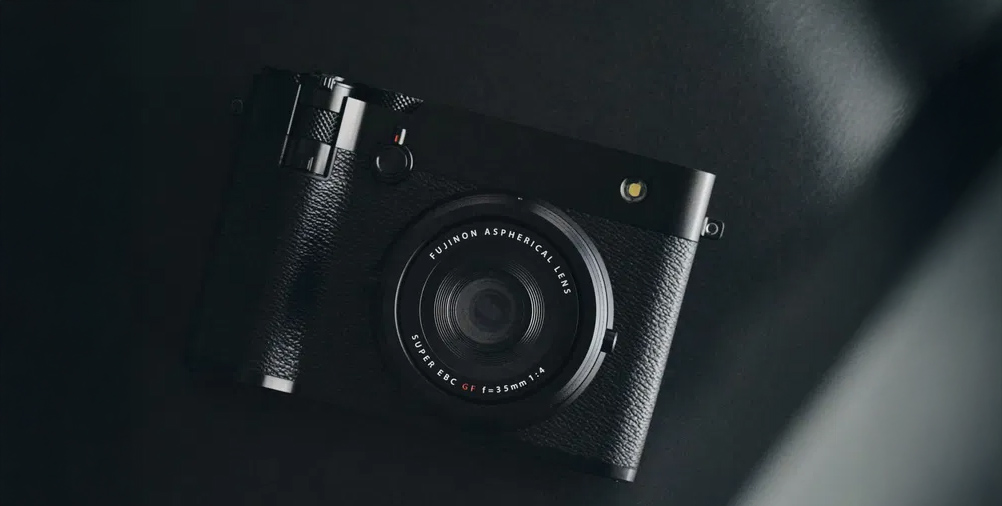
The Fuji GFX 100RF arrived from Lensrentals.com looking brand new. The first surprise was how compact it felt compared to the other GFX cameras. For a medium-format camera, it is downright svelte, close in heft to a Nikon Z7 with a small 35mm lens. The design evokes a modern digital version of the Plaubel Makina 67, but I’d prefer it if it came with a 45mm lens instead of a 35mm one.
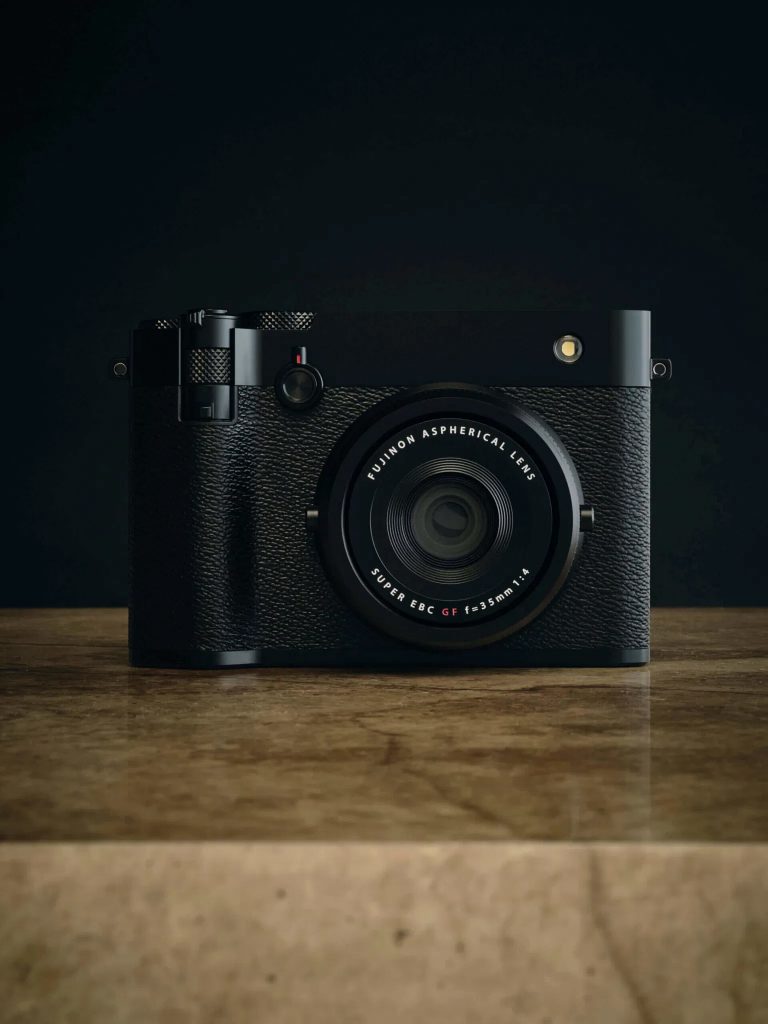
This is a controversial camera. Many people seem to concentrate on what the camera doesn’t have: in-body image stabilization (IBIS) and a fast lens. However, including those would have made the camera bigger and heavier, and Fujifilm concentrated on reducing size and weight as much as possible while still keeping the Sony 33x44mm 100 MP sensor. Fixed lens high-end digital cameras are a niche market to begin with, and this emphasis on portability makes the GFX 100RF a niche within a niche. If what it does is what you want to do, it’s a convenient, lightweight, fluid operating tool. Those folks who like the 28 mm full-frame field of view and want medium-format quality can get it with the 100RF. There are other fixed lens options out there, but only the GFX 100RF checks all the boxes if you want a small, light, precise, 100 MP medium format camera.
Full disclosure. I don’t shoot JPEG. I have noticed that many people who like this camera tend to make JPEG images most or all the time. My perspective on photography is so different from that of people who are happy with straight out of the camera JPEGs that I expect that this review will be of little use to that cohort.
The ergonomics are a mixed bag; mostly good, with a few clinkers. The on/off switch action is so light that I can imagine it being inadvertently tripped in a camera bag; I found that I accidentally turned the camera on a lot. The Q button has been redesigned to sit flush, a welcome change that reduces accidental presses. Aperture and shutter speed each have an “A” position, which makes the exposure system flexible, and ISO is adjusted via a collar around the shutter dial. That’s an elegant solution, but the lack of detents while setting ISO means you can’t operate it confidently by feel. The exposure-compensation dial is a highlight, generously sized and perfectly positioned for thumb access. Unfortunately, the knurled dials and joystick suffer from vague, mushy feedback; Fuji still lags Nikon in haptics. A few other details disappoint as well: the battery door latch doesn’t self-engage, and the card slot door feels second-rate compared with Nikon’s design. I would have preferred a CFExpress slot instead of the two SD card slots.
The lens itself is a strong performer considering its size. It delivers excellent sharpness on-axis until diffraction provides appreciable blur, with only a modest falloff toward the edges. Field curvature is essentially absent. Distortion is noticeable in uncorrected files, but digital correction leaves little trace and costs almost nothing in sharpness. Vignetting is moderate but disappears once corrections are applied. The leaf shutter is quiet and contributes to the camera’s appeal, though at speeds of 1/500 second and above, it introduces bokeh artifacts. These become obvious at 1/4000 second but are still less objectionable than the artifacts produced by Hasselblad’s XCD 38V and 90V lenses.
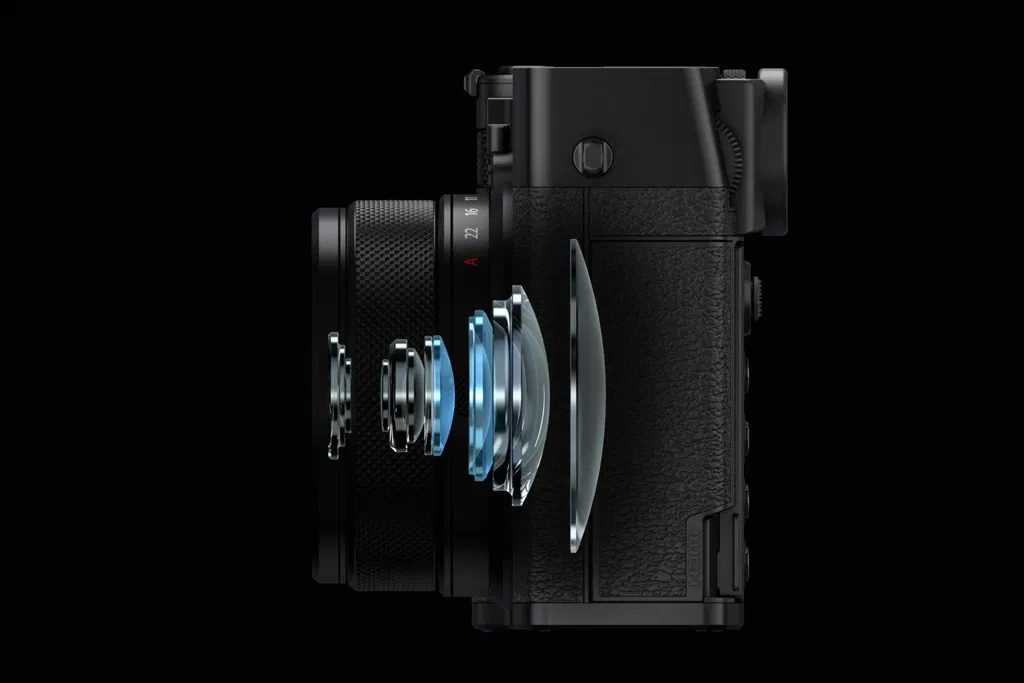
The sensor appears to be the same as in the GFX 100 II, complete with Fuji’s curious ISO 80 black-point subtraction. Image quality is excellent and familiar to anyone who has used that camera. Autofocus is also on par with the GFX 100 II: entirely adequate by medium-format standards but behind what today’s full-frame cameras can do.
Some have reported difficulty syncing flash at high shutter speeds. I would expect some issues with wireless triggers. I tested with a dumb flash on the hot shoe, and everything was fine except there was a minor loss in light at 1/4000. A change in exposure will occur unless the flash duration at the chosen power setting is significantly shorter than the shutter speed. At full power, you’ll likely see light loss at 1/4000 second shutter speed, since the flash duration will probably be longer than 1/4000 second.
The battery life of the GFX 100RF is somewhat better than that of the same battery in the GFX 100 II or GFX 100S II. I surmise that this is because of the lack of IBIS and the lower power demands of the leaf shutter in the GFX 100RF lens vis-à-vis the focal plane shutter in the other two cameras.
Overall, the GFX 100RF is a small, purposeful tool for medium-format work. It should make a good travel camera. I’m not a big fan of the crop control. As a compositional aid, it has its uses, but it is too large and would benefit from a lock. The integration of the camera metering and the crop tool is strange: the exposure recommended by the camera will vary with the borders chosen for the EVF crop display.
If you’re used to GFX cameras, you’ll bond with this one readily. If you’re not, you will find it a little eccentric. The Fuji user interface is a little unusual, but I like it.
If you think of this primarily as a medium-format camera, then you must also be happy with the perspective of a 35mm lens on a 33×44 mm sensor, about the same field of view as a 28mm lens on full frame. Otherwise, you’ll have to crop, which means you won’t be using all the sensor. If what you really want is the look of a 35mm lens on full frame, then you’ll end up with a 60-megapixel camera instead, and the Leica Q3 or Sony RX1R III become serious alternatives. The GFX 100RF weighs about the same as the Leica, but the Sony is considerably smaller and lighter. The price story is equally tight: the Fuji and the Sony are about the same price, and the Leica is somewhat more dear. In other words, choosing a full frame won’t save you money, but it might save you weight. Of the three cameras I’m comparing here, only the Leica has IBIS, which will probably make it the better choice handheld in dim light.
We had been using high-resolution cameras with no IBIS for years. It’s not necessary. However, in some situations it’s really nice to have, and if you find yourself in those situations a lot of the time, you should at least consider the Q3.
Fuji is pushing the cropping characteristics of the sensor in the GFX 100 RF. It’s true that you can crop more aggressively from a 100 MP sensor than a 60 MP one of the same pixel pitch. You can crop more than with the Q2 at the same angle of view. However, the sensor in the GFX 100 RF offers the same cropped image quality at the same angles of view as the Sony RX1R III, so there’s a win there for the GFX only between the full-frame angles of view of a 28mm and a 35mm lens.
Here are some details:
These two images show the way the bokeh varies with shutter speed:
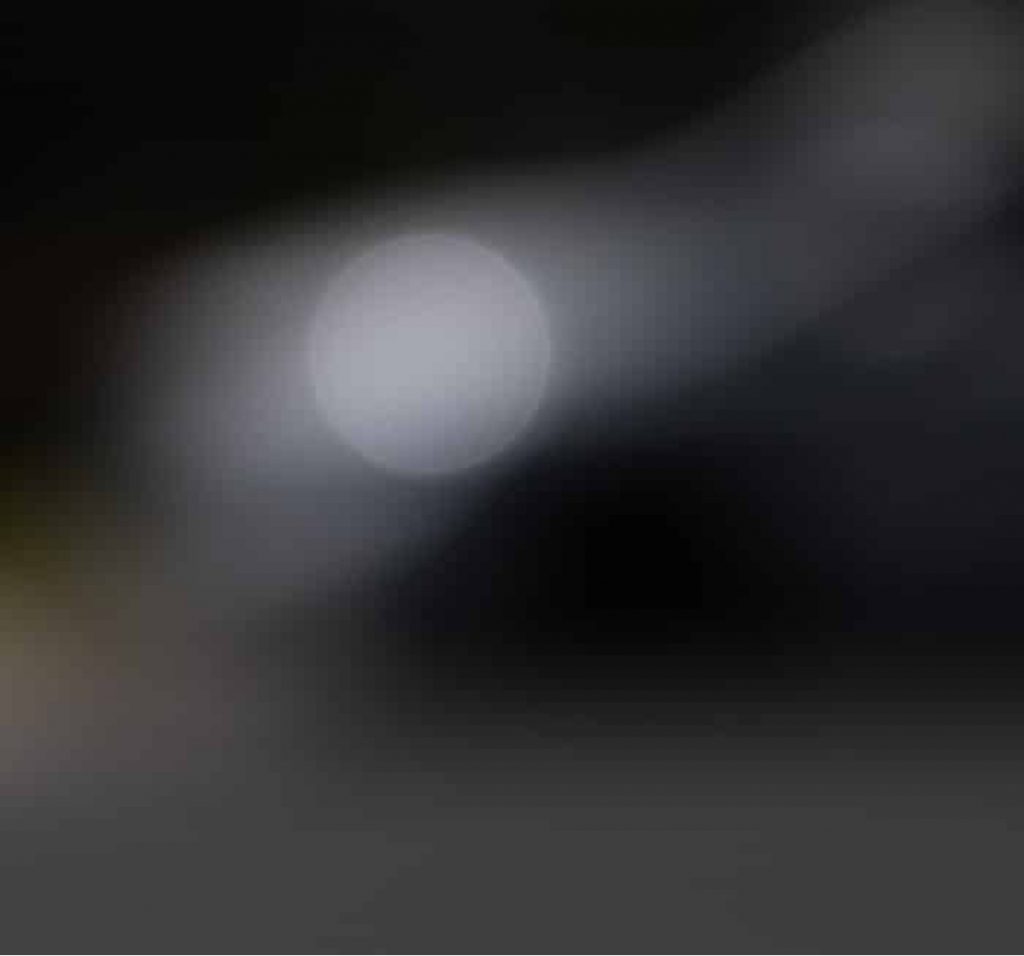
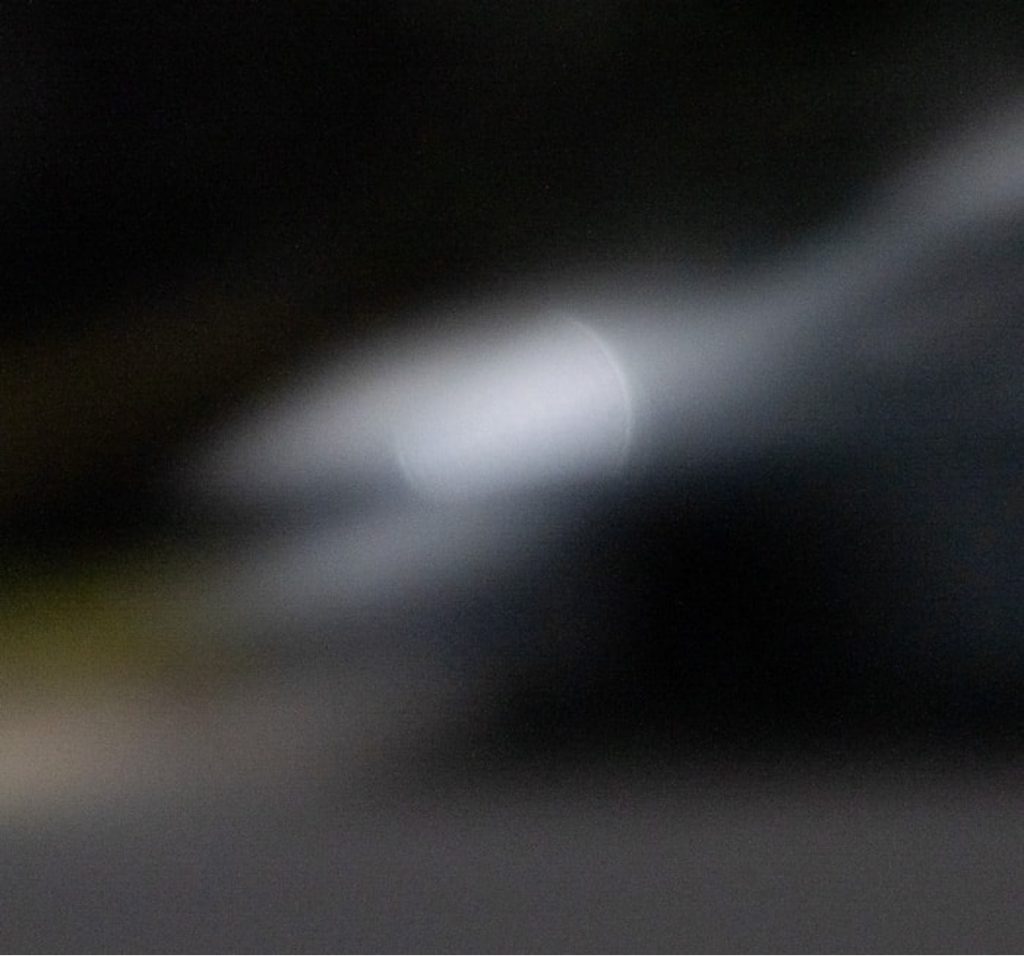
The bokeh balls aren’t round at high shutter speeds, and there is more depth of field than you’d expect because the shutter acts like a diaphragm. Field curvature, or lack of it, is excellent:
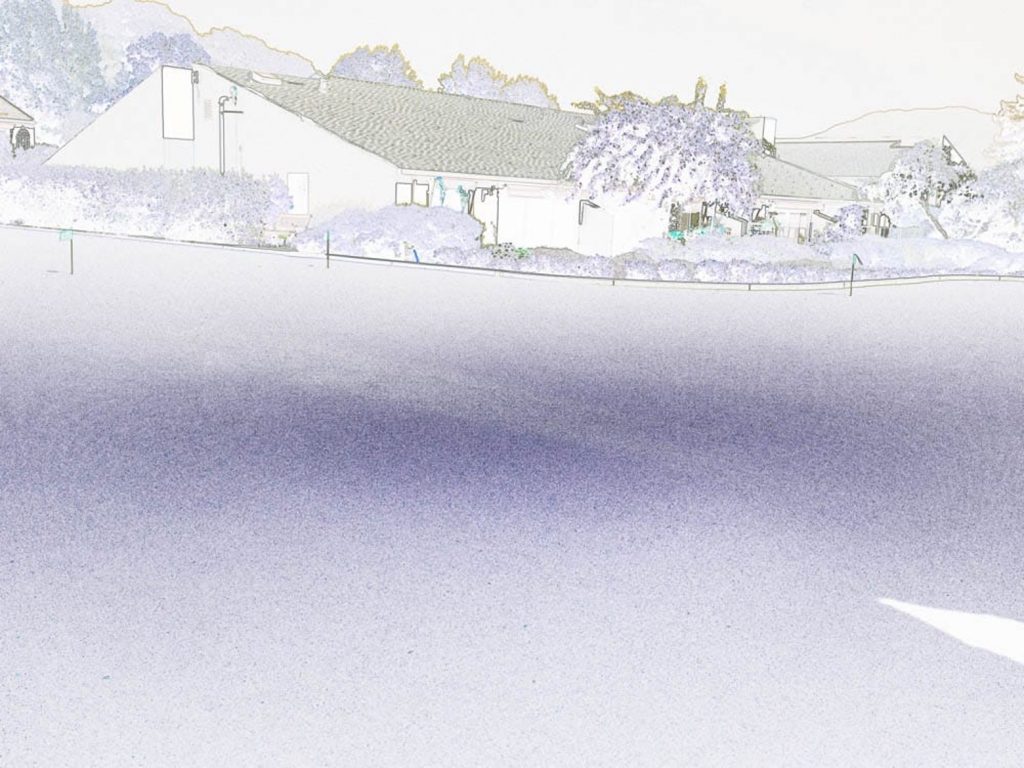
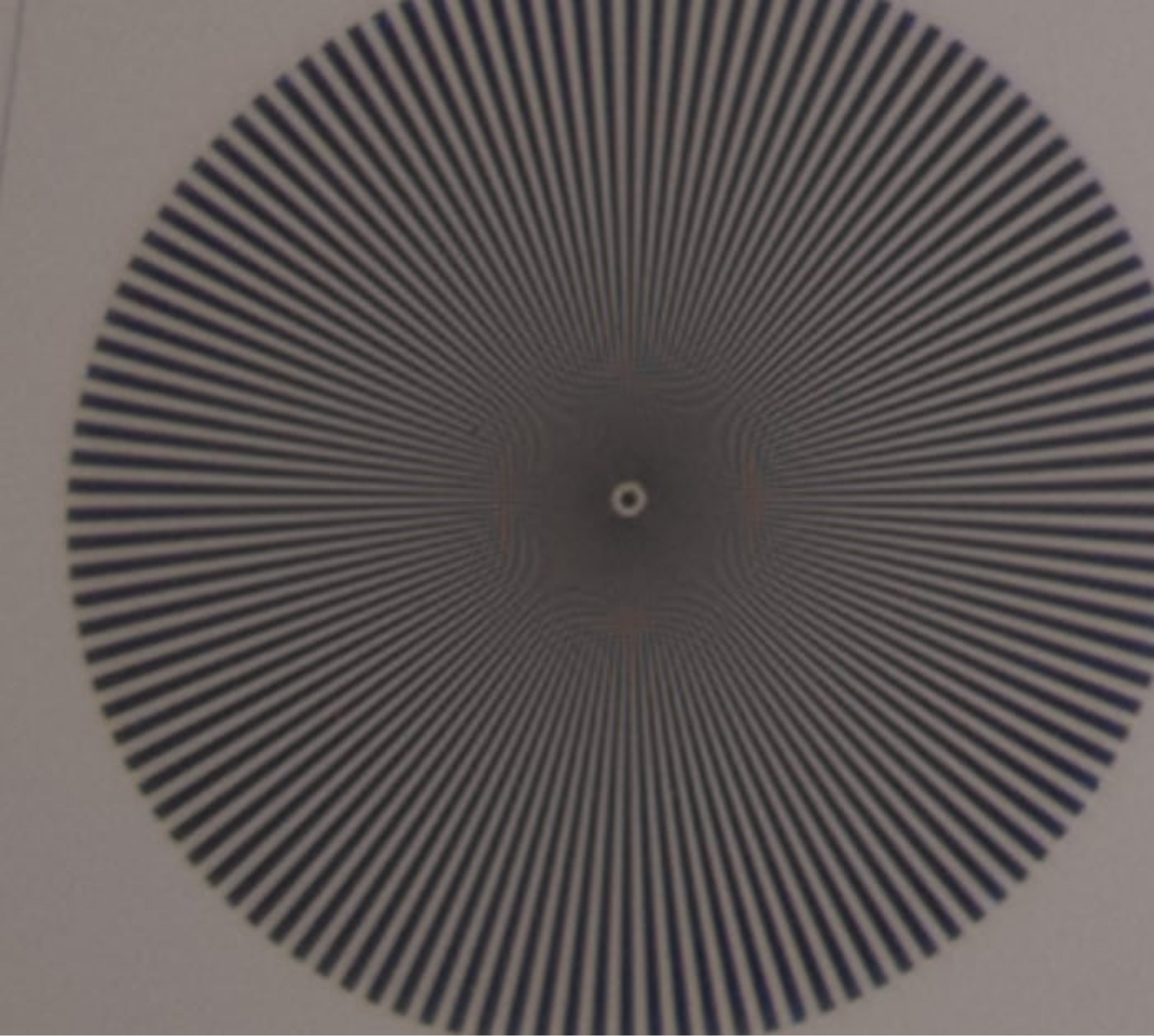
The lens seriously outresolves the sensor on axis wide open:
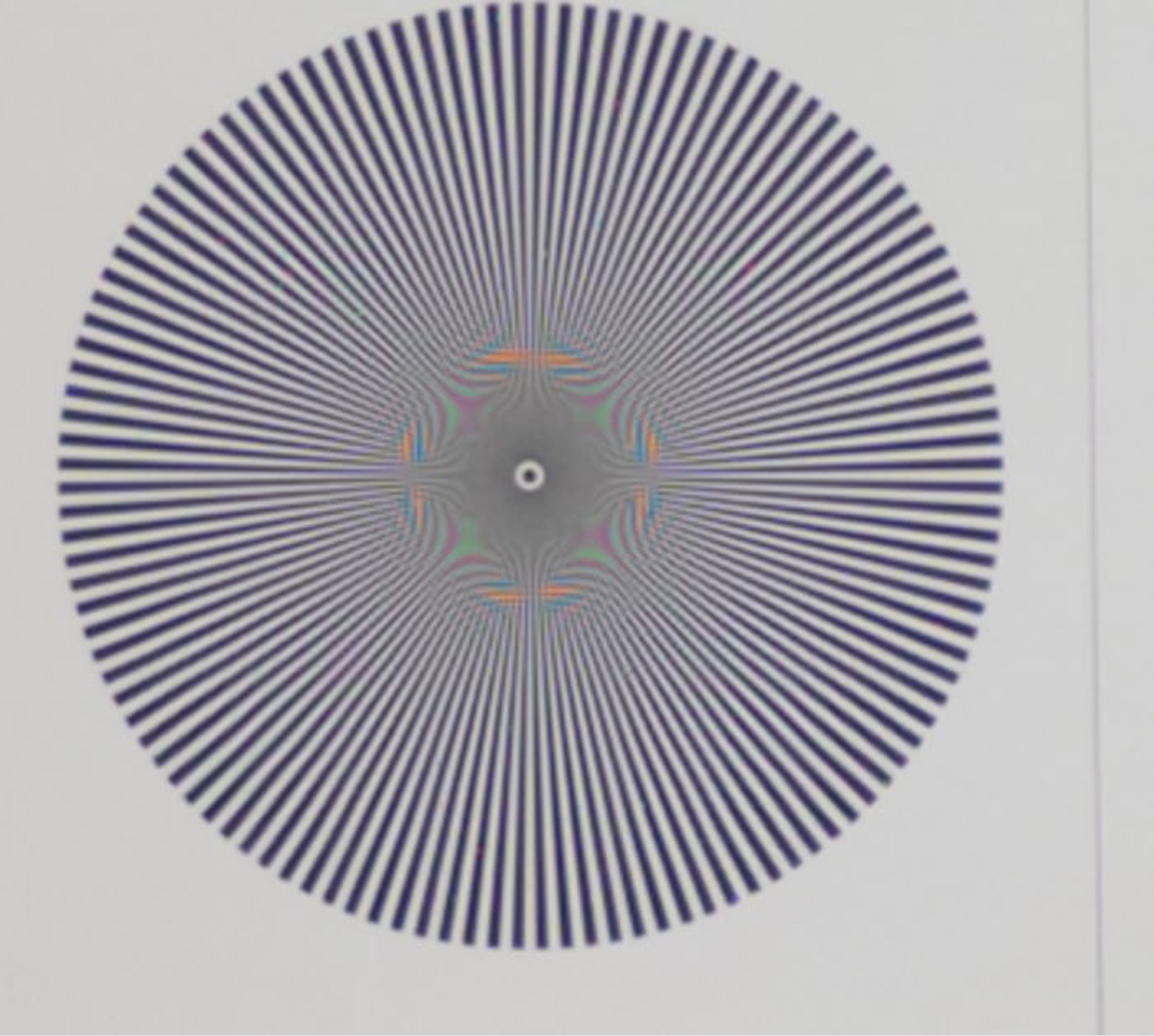
Even in the corner, the sharpness is good:
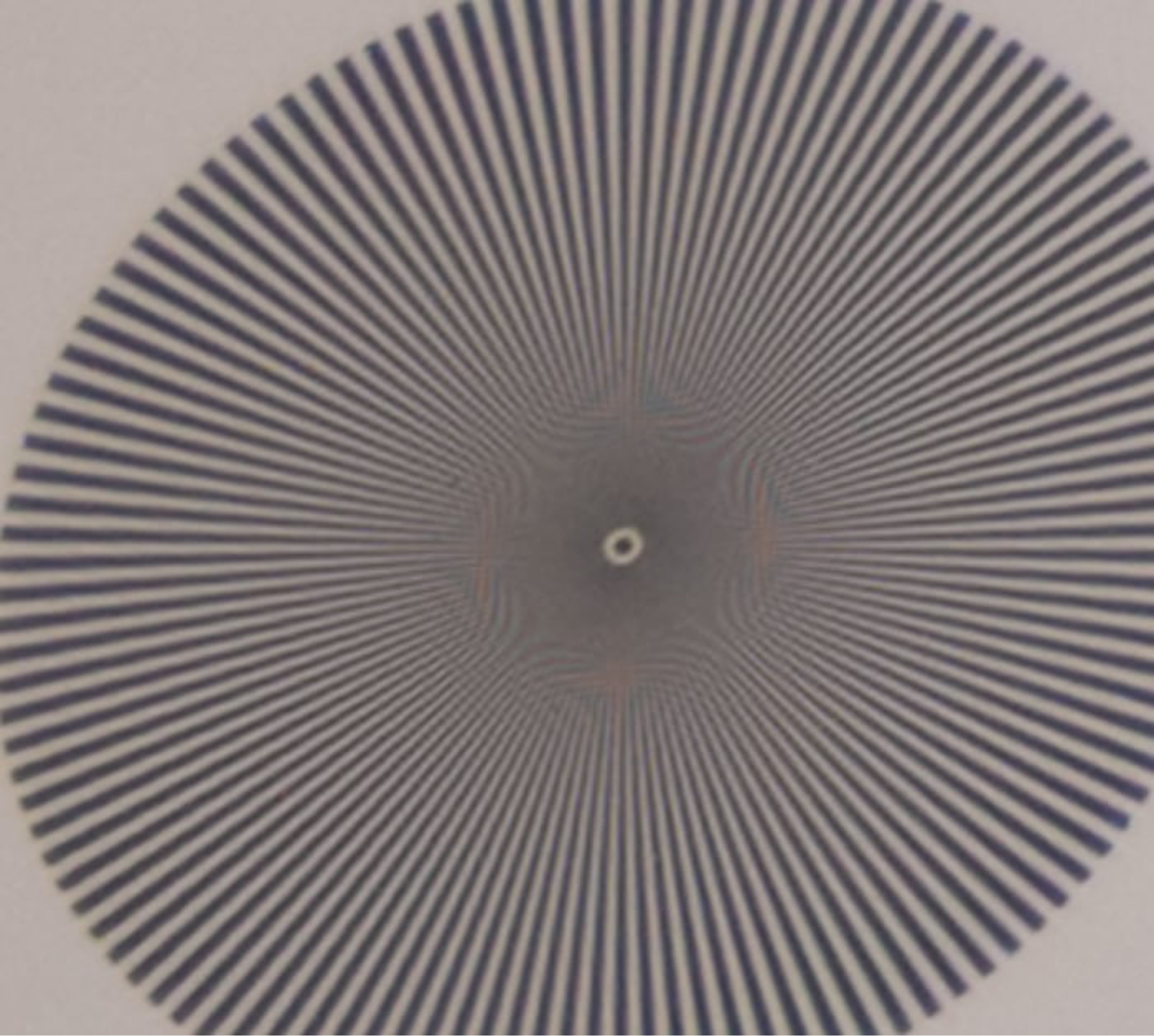
The above two images were processed in Lightroom with lens corrections on. If I turn them off, the wide open corner shot looks like this:
The illumination falloff is visible.
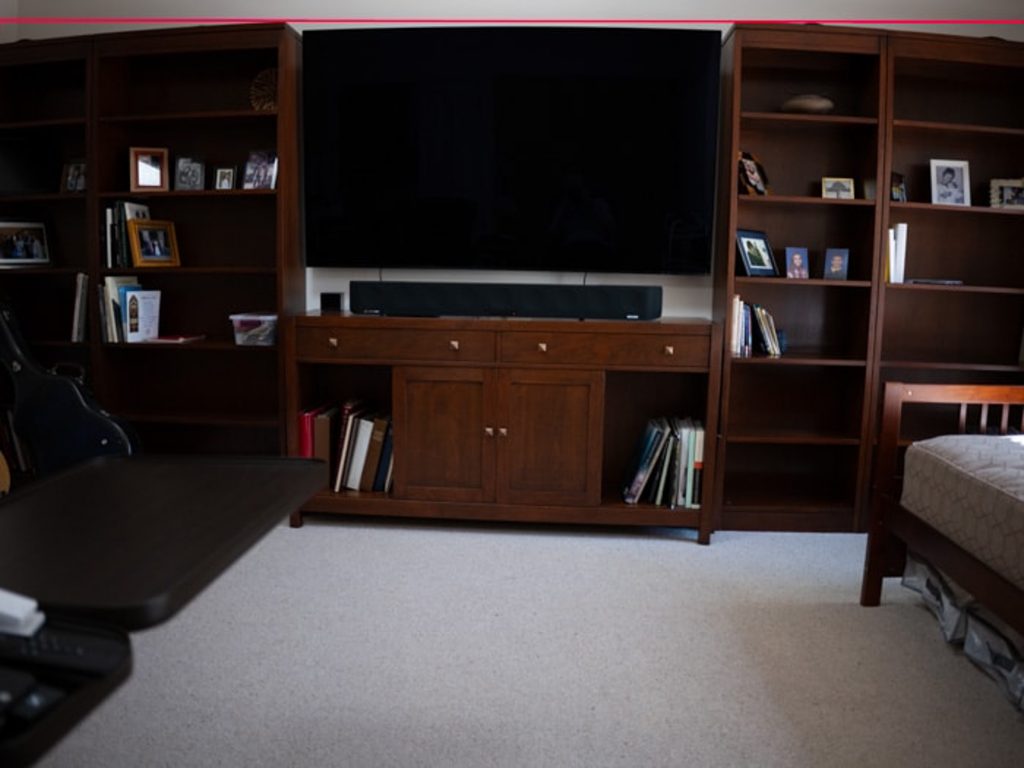
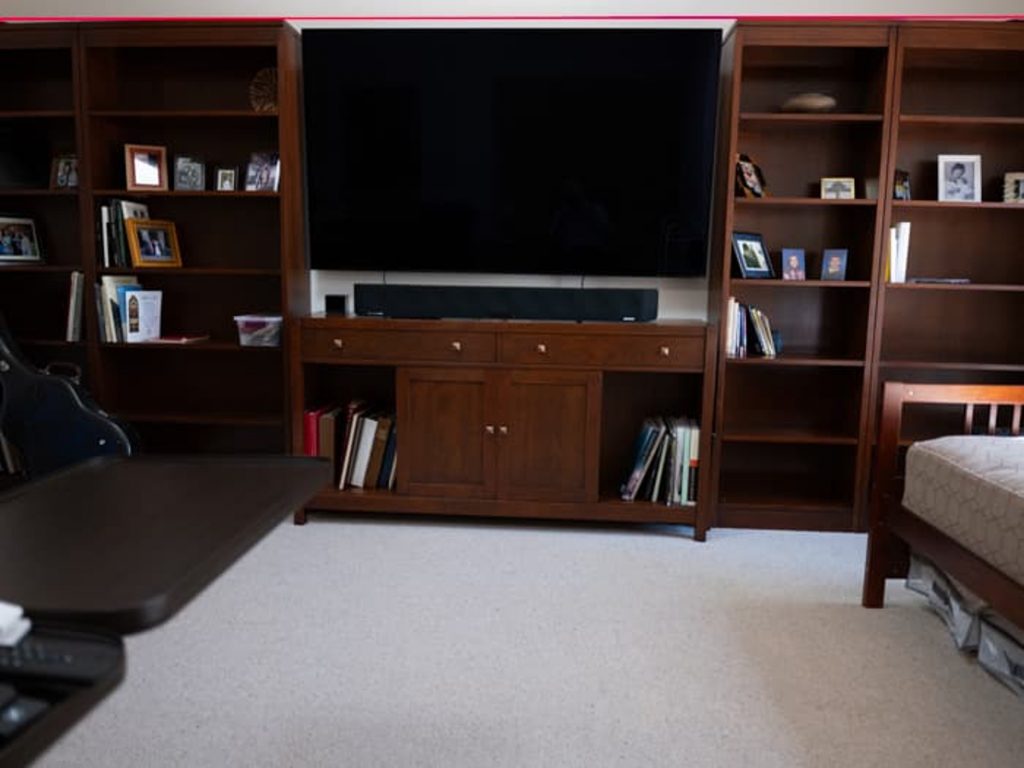
Uncorrected distortion is evident below:
But things improve a lot when I turn corrections on in Lightroom.
If this camera had a 45mm or 50mm lens, my credit card might be burning a hole in my pocket, but as it is, I’m going to give it a pass.

