
Please, Don’t Take Our Photography and Video Gear to Burning Man
Each year around this time, we’re faced with what we call a ‘doomsday’ event within the office; where dozens of our camera, lenses and other gear arrive back from rental orders, destroyed by the environment. And while our customer base is amazing, and often accept their repairs and replacement costs to the destroyed gear, each year, the same thing happens. So this year, we decided to take a different approach, and plea – Please don’t bring our camera gear to Burning Man.
Burning Man is an annual event and art installation that takes place each year in the deserts of Nevada. With over 60,000 people in attendance each year, Burning Man has become one of the most popular events among creatives, looking to find inspiration in their work. It has also been a favorite place where people look to document the experience, and as a result, come home with destroyed cameras and lenses.
Despite the warnings from articles scattered around the internet, as well as warnings from Burning Man themselves, people each year attempt to take camera equipment to Burning Man. Many will prep, covering their cameras with gaff tape, plastic bags, and filters, but there is no failsafe to the damage that can be done to cameras and lenses alike. Events like Burning Man are why we have a neglect clause within our rental agreement, though each year, we do have a few pieces of gear that have obviously arrived back from Burning Man. We have a talented repair department, and these things happen, but we wanted to share with you why Burning Man, in particular, is so rough on equipment.
One would think that the biggest concern when going to Burning Man would be the sand from the desert in which it is held. While the sand is a menace and will jam up a zoom lens in no time, the biggest concern is actually the dust. One of the more interesting phenomena that happen during Burning Man are the dust storms. Thes dust storms occur erratically and with little warning, kicking up the fine dust buried within the sand and quickly causes damage to your electronics, your skin, and your lungs.
But dust storms aren’t the only potential damage your camera might endure; you also run into water damage – or more particularly, sweat damage. Last year, temperatures at Burning Man were over 100°F (38°C). This level of heat causes people to sweat, and when you’re sweating with a camera hanging around your neck all day, some of that sweat is bound to get into the internals of the camera. As we’ve talked about before – water isn’t good for electronics, but what is the real killer is the impurities within the water – and in particular, salt. Salt builds up on electronics, is a conductor of electricity, and will fry electronics in no time. A topic Roger discussed last year with his Sony a7sII Teardown.
Examples of Damage
While it’s easy to heed a warning, it’s much more effective when we put together a few examples. So here are some of the returns we’ve seen from Burning Man in previous years.
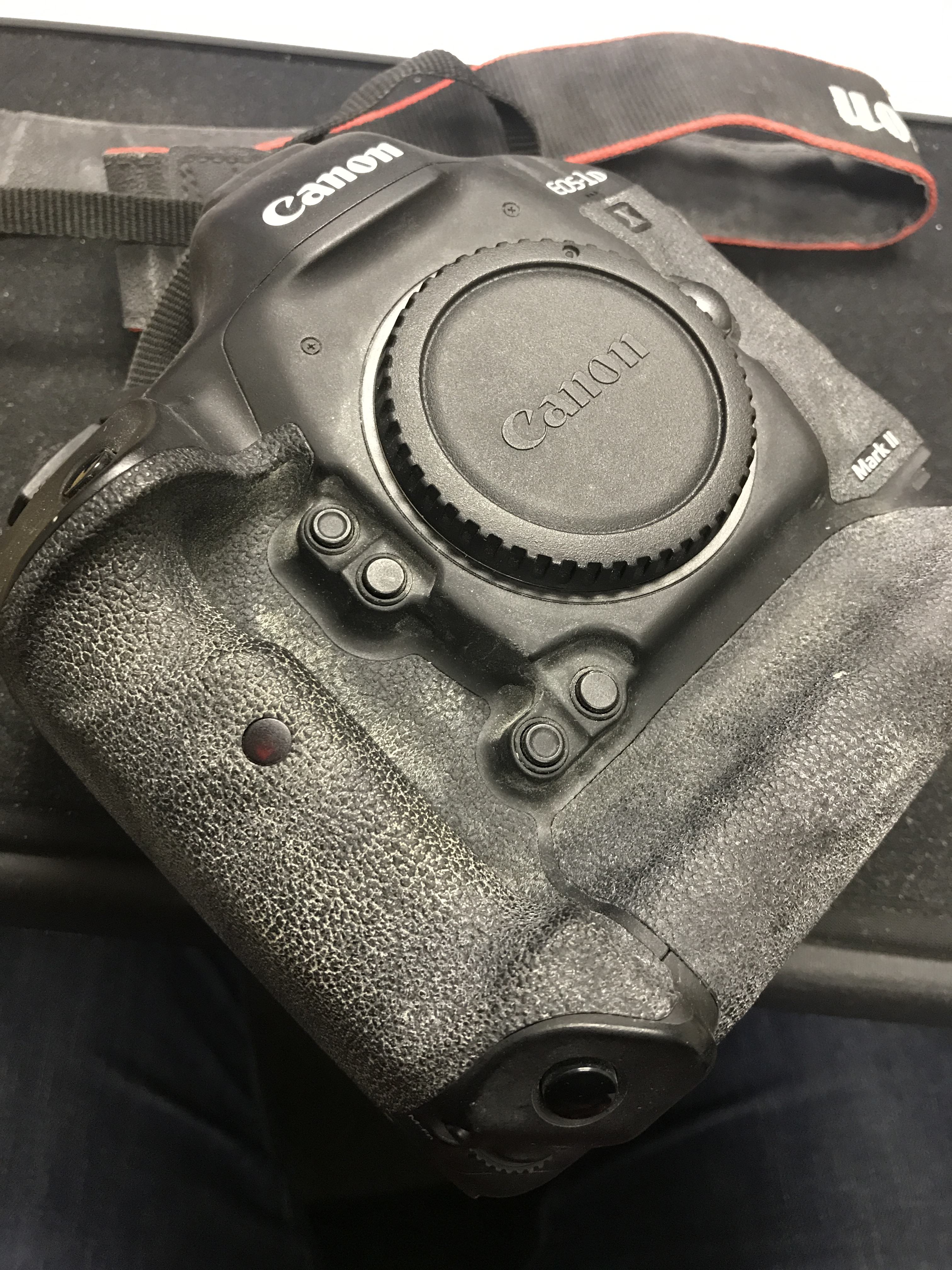
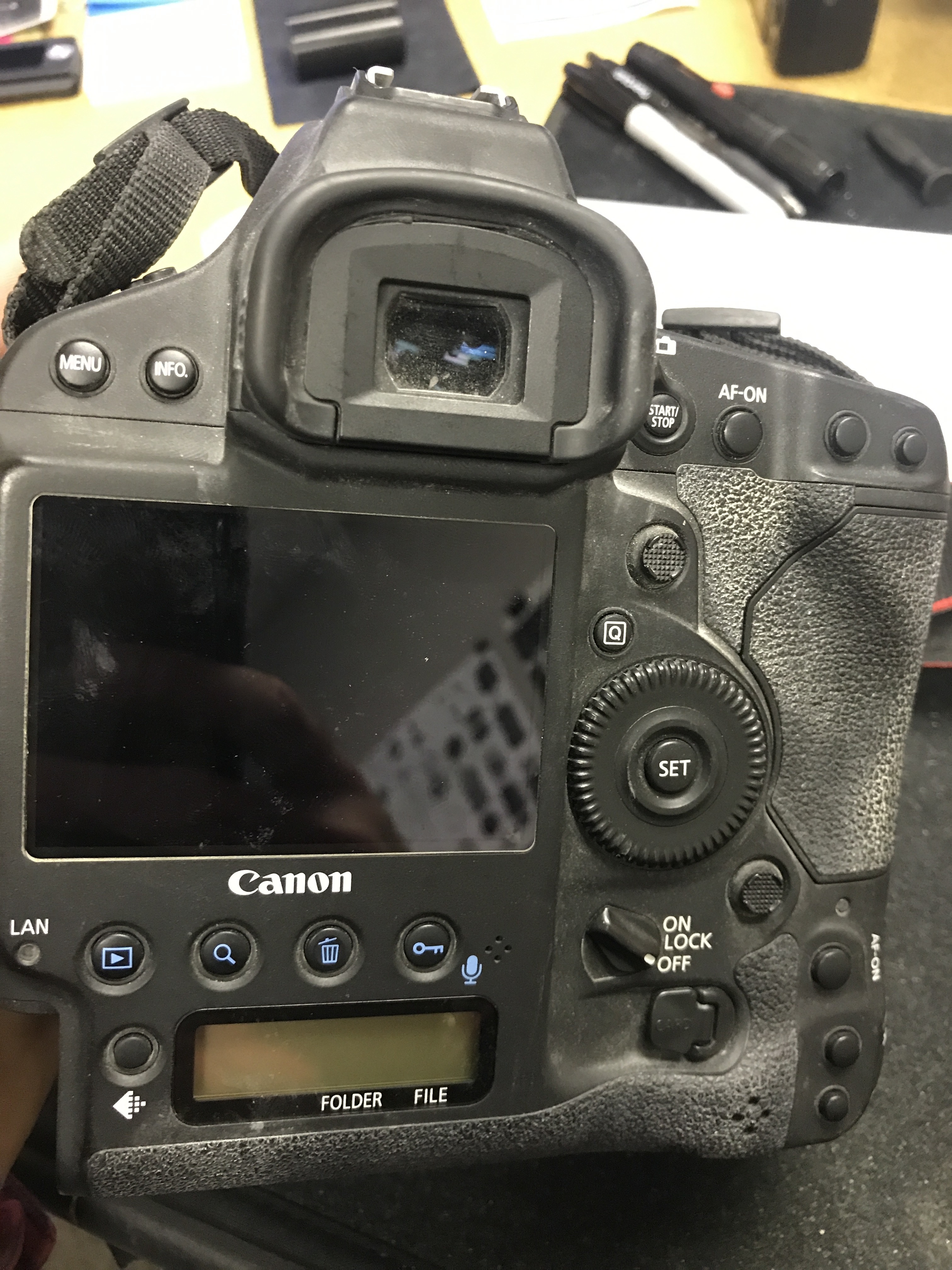
I know what you’re thinking, the Canon 1DX Mark II is the camera choice for the Nat Geo photographers climbing to the summits of Everest, and the cameras that are snapping photos in front of photojournalists travel to war ravished cities. But while the Canon 1DX Mark II is built for abuse, it doesn’t mean it’s impenetrable to that abuse. This Canon 1DX Mark II was sent back to us after a Burning Man trip, and needed a full inspection and cleaning from Canon. The cost was a few hundred dollars, but despite claims of ‘weatherproof’, the dust still found its way into the camera system.
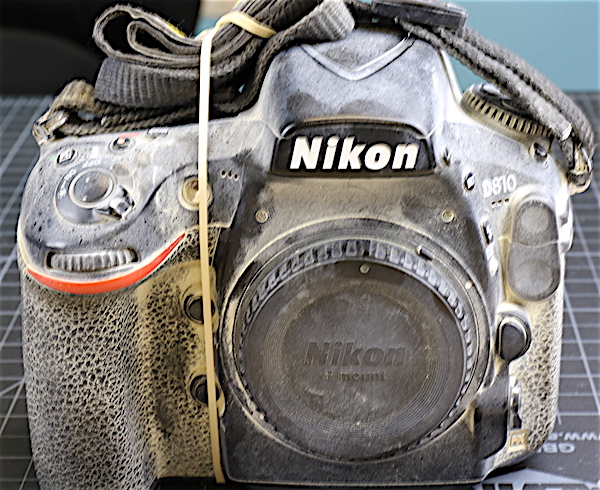
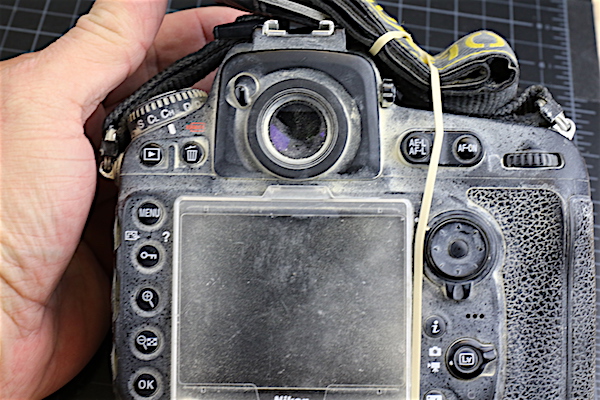
You may recognize this Nikon D810 from a post Roger did a couple years ago, where he needed to take it apart for cleaning and inspection. Not only was the outside of the camera caked in dust and dirt, but the insides of it were as well. After a full teardown and cleaning the camera was able to pass all of the tests and make its way back into the rental program. But not without a couple hundred dollars being charged to the customer for the servicing.
Sigma 24mm f/1.4 DG HSM Art Series
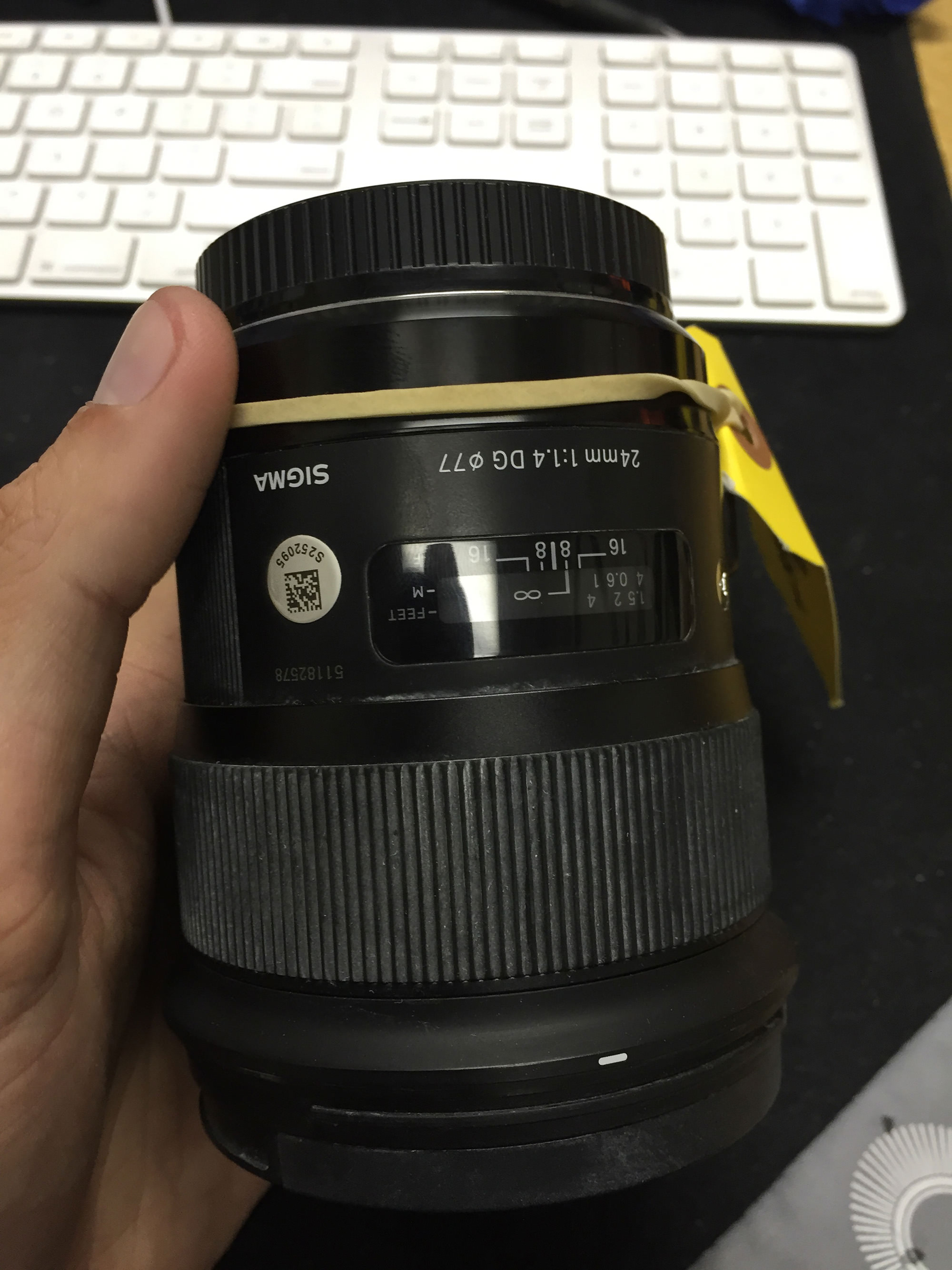
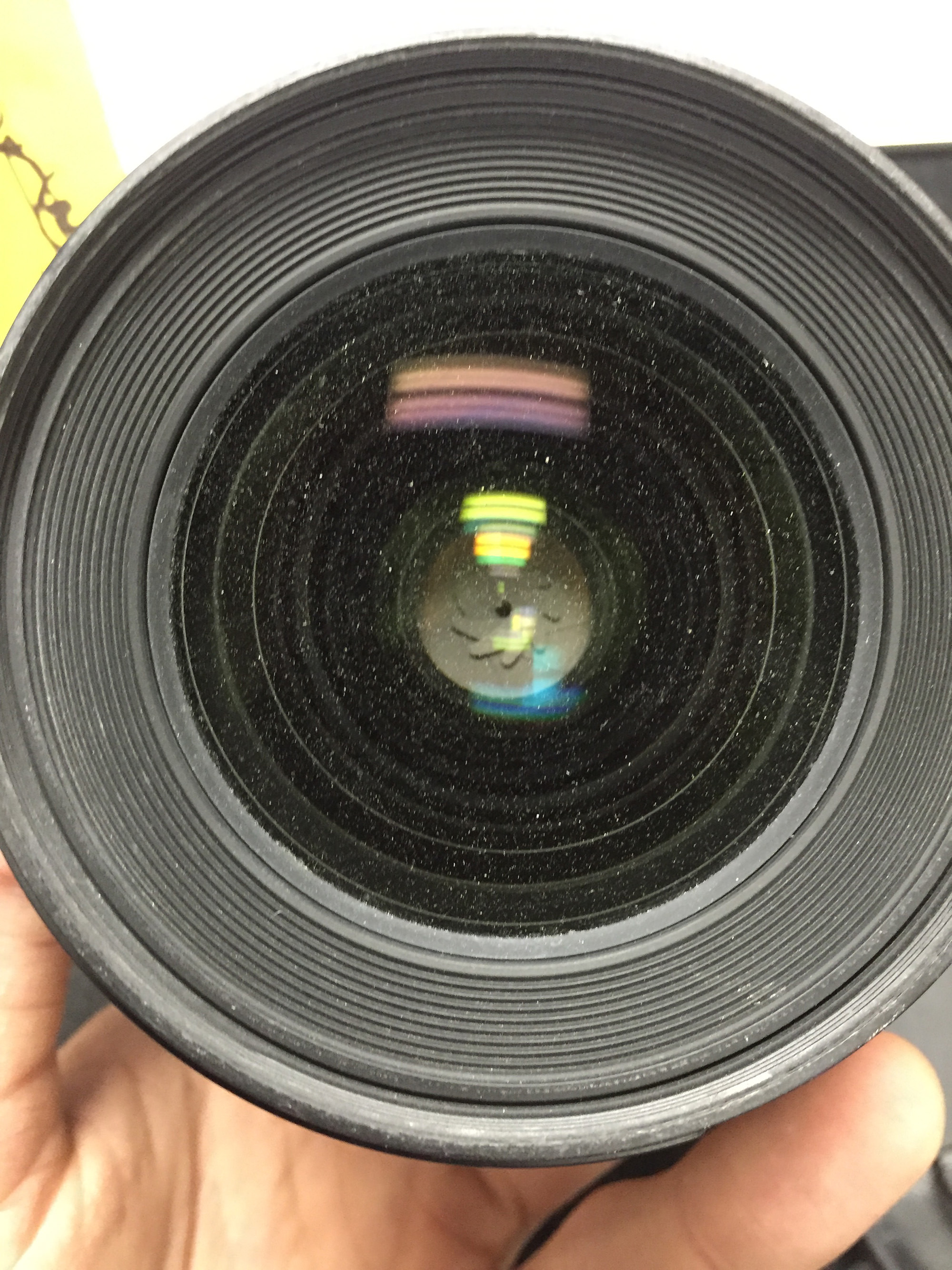
This Sigma 24mm Art Series came back to us a few days after Burning Man and had some of the dust to prove it. Repairs on the lens included a full replacement of the housing and lens grouping directly from Sigma, bringing the damage to $235.

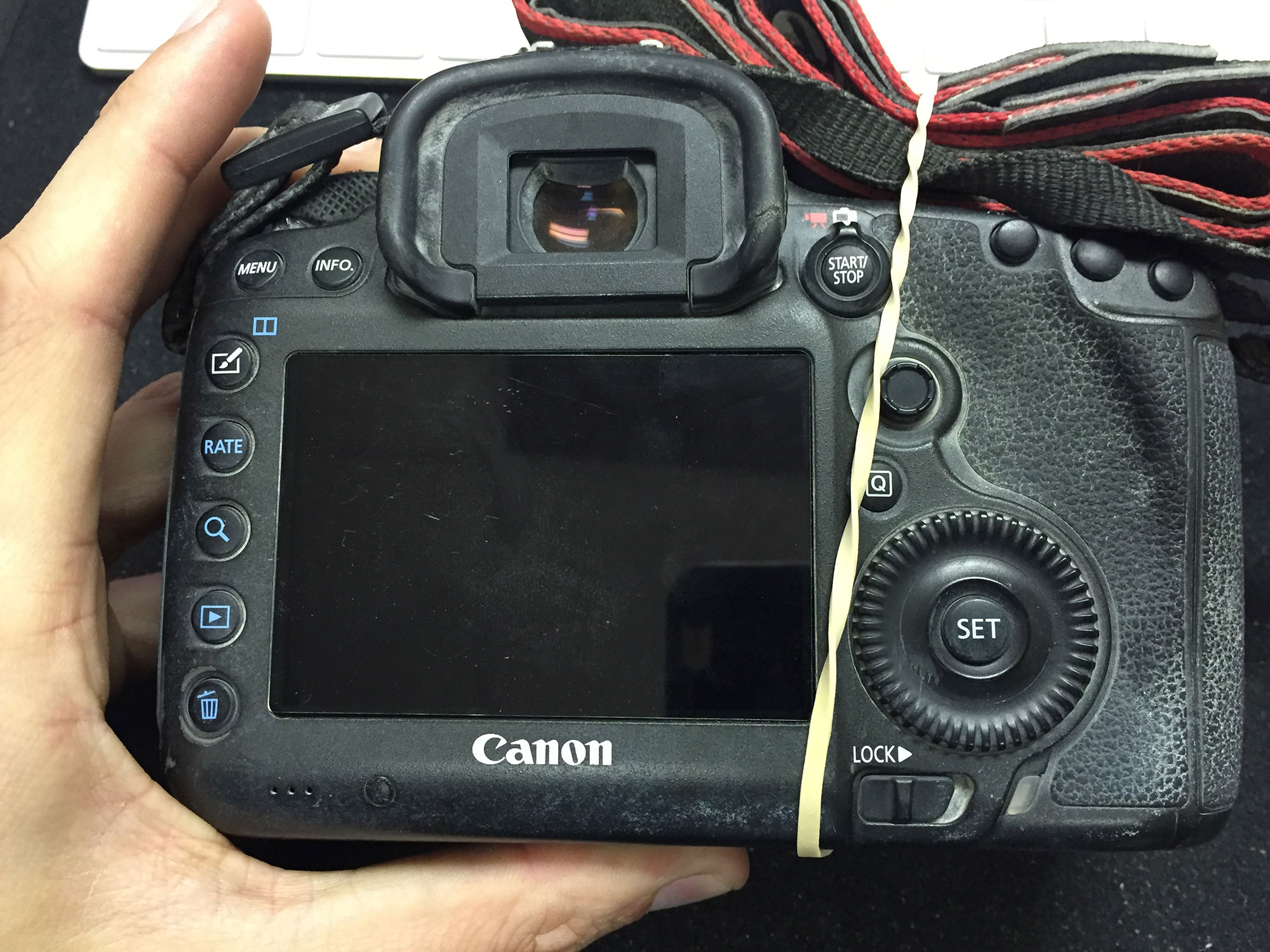
This Canon 5Ds came back and required a full cleaning from our repair department. The process is long and tedious and resulted in over an hour of disassembling and cleaning of the insides and out.
If you do take a camera to Burning Man, please know and accept it will be damaged by the event. For every one of the “My friend Steve brought his camera and it was fine” stories, ten stories end in heartbreak.
Alternatives To Renting
While many blogs may follow up the damage with tips on how to better weather seal your camera, we’re a little more cynical. With an entire repair department working on thousands of pieces of gear, we’ve learned that weather-sealing is a bit of a marketing tool, and not really indicative of any real standardized meaning. And while plastic bags, waterproof kits, and gaff tape may help, it isn’t a failproof solution, so our best alternative for you is to just purchase what you need for Burning Man, and recognize the risk.
LensRentals Used Gear Purchase
This also gives us the proper segue to recommend our purchase site. We have a used marketplace where all the gear is inspected, cleaned, and then rated on an easy-to-understand scale. This is where our rental equipment usually ends up after a few months in the system. You’re able to get well-maintained and inspected gear, at a fraction of their new cost.
We recognize that sometimes mistakes happen, and try to make these posts be in good light, while also making you ill with our photos of damaged equipment. If you do damage the gear rented from us, that’s not a problem. Just send it back, and we’ll contact you when it is received, with a repair cost. Our repair department is highly skilled and always preferred over people trying to fix it themselves before sending back. Damaged gear happens, which is why we offer insurance solutions like LensCap. And while our insurance system is excellent, it doesn’t cover neglect like that shown above.
Do you have some gear you brought along with you to Burning Man? Share some photos and your stories in the comments below.
70 Comments
Astro Landscapes ·
It ain’t exactly Burning Man, but this is the worst I’ve ever done to cameras…
https://uploads.disquscdn.com/images/2e81d0b7e5c2da83b17da9cc26636146d8264730917c65f05f78f133d9ff0610.jpg
Athanasius Kirchner ·
They look cute like that, all colorful and covered in crystals 😀
Astro Landscapes ·
I bought the pink tripod and red camera specifically for their cuteness. It was very important to me. 😛
chris lynch ·
I took a Nikon D90, D700, and several lenses to Iraq with me for 4 months in 2009. Went through 3 or 4 dust storm.
I guess they don’t make them like they used to?
Perry ·
you took them out of a bag during a duststorm and photographed?….. i doubt that.
people don´t take care of equipment they rent. especially not at events like burning man.
chris lynch ·
Yes, I took photos in dust storms. My cameras and lenses did just fine.
Perry ·
looks like a normal day in every chinese city. 🙂
i doubt you cameras had to endure the same as the examples here on lensrental.
James Bong ·
That’s a pretty generalized statement. Really it only takes a few renters treating gear badly to give the group a bad name. When I’ve taken rented gear to Burning Man, I returned it in as good condition as it was given to me, and I know plenty of photographers who do the same. Unfortunately we can no longer say we are taking rented gear to the event, because of a few bad apples who don’t give a damn about rented gear. These are the same renters who will treat gear poorly no matter where they go.
Patrick Chase ·
Did you then rent those cameras and lenses out to paying customers who expect them to be in “near new” condition?
Gary ·
How does Antelope Canyon do for damage? I’ve heard the blowing grit and dust down in there can be quite horrific.
Seldom Scene Photography ·
I’ve been to Antelope Canyon twice (once to upper, once to lower), and didn’t have any problems. Of course, YMMV…
Carleton Foxx ·
I spent a week in nearby Paria Canyon which also generates fine red dust and the kit zoom on our Canon Rebel got pretty crunchy but it lived. I definitely would never ever change lenses out there though.
That trip was in April and I’m still finding red dust in boots, clothes, and equipment.
DrJon ·
Would taking a camera in a waterproof housing work (note, not going there, just curious)?
grubernd ·
a real diving enclosure will not help. they are designed for making the high pressure of the water to seal by pressing the halves of the enclosure together onto the o-ring. also they are made out of pretty brittle polycarbonat, drop it on ground and it breaks.
my best guess for events like burning man, color runs, etc would be one of those tough beach cameras, but i would never rent it or have any hope of bringing it home in prime condition. get a few images, thanks.
DrJon ·
Maybe an opportunity for some zip-lock bags full of disposable film cameras… 🙂
Athanasius Kirchner ·
Er, what? My cheapo Chinese housing works wonders for dust and sand, and isn’t “made out of pretty brittle polycarbonat” (sic) – it’s a soft-as-butter plastic that can’t resist anything beyond a feather for scratches, but wouldn’t break from an impact – ever? I don’t know, a meteor strike could *melt* it, and a big mining truck would probably flatten it, but I sincerely doubt it’d ever break.
grubernd ·
well, if it scratches easily, it is also pretty useless in that
enviroment, because dust and air and sweat make a great sanding mixture.
so, i made my comment too general. sorry, that shouldnt happen when Roger is just around the corner. yes there are other diving enclosures made from other materials. aluminium, plastic bag, etc.
they still have the problem that they are mainly designed to work at
high pressure and i would not trust them to keep out alkaline dust under regular atmospheric pressure. a ziplock bag is probably better for that.
Athanasius Kirchner ·
Well, it’s worked for me in sandy environments.
The housings that I’ve used all work well even with normal atmospheric pressure around them, because that’s kind of the point – if a housing can’t keep the much larger sand and dust at bay in a low-pressure environment, then how in blazes will it stay watertight?
grubernd ·
the trick is the pressure. two parts press against each other with a sealing material between. the principle is used everywhere, from pipes to bottles and so on – where you tighten (screw) the two halves together.
for stuff that goes underwater you can skip the tightening part, because just a few decimeters of water will create more pressure than you need to keep the seal tight. it’s like a pressure cooker inside out. =)
Athanasius Kirchner ·
Sure, I get that, but the size of dust grains is massively larger than water molecules, and dust is usually subject to much lower pressures than water, meaning that just the normal rubber seal, depressurized, should be able to keep them away.
Short of opening the housing without hosing it down first (BAD idea), I don’t see how dust would get inside.
hussey ·
Yes, a waterproof housing would help. I’m not sure what these people are talking about.
James Bong ·
In my experience, all you need to do is keep your camera in a good camera bag with double layered closures when you’re not using it, and clean the outside of your gear daily. Also only use one lens if possible. If you need to change lenses, do it in an enclosure, or only when the wind has died down. Following these rules I’ve only had dust on my sensor once at Burning Man.
asad137 ·
FYI — it’s “segue”, not “segway”.
t_linn ·
And to make things more confusing, “segue” is pronounced [roughly] seg-way. 🙂
odddave ·
Are you sure it’s not squeegee?
Perry ·
don´t take sony gear outside… i did not follow that rule and my A7R2 broke.
a spritzer of saltwater killed my sony. something all my other DSLR cameras over the years would have survived easily.
Athanasius Kirchner ·
Well, a rogue wave, torrential rain, and 90% humidity didn’t kill my Sony RX10 IV. The rain and humidity also didn’t even tickle my A6500 and lenses, despite substantial condensation.
On the other hand, a Fujifilm X-T20 that I had lost the touchscreen to just a little condensation, an Olympus E-M1 (a supposedly TOUGH camera) had its rear dial die on me just because, another E-M1 developed a faulty battery latch, and a Canon 6D had its hot shoe shorted by a spontaneous shower.
How’s that for useless anecdotes?
Marc P. ·
Well, if one really need pictures at the Burning Man, how about an old Canon 20D/30D, with a current 18-55 STM Kitlens (F4-5.6)? I’d be also worse, even this cheap gear to get broken, but at least, it’s way cheaper than a FF DSLR….
I do use this combo on “unsave” locations, when taking pictures, and both are like into mint condition.
About the Hotshoe Issue – i have no weather sealed DSLR, but i put always a hotshoe cover onto it, to avoid dust, sand, corrosion, dirt onto it. It helps, and it does cost only a few cent.
Idahodoc ·
I’ve lost 2 Canons to water, both 7D’s. One to humidity alone while boating (fried circuit board) and later one with a small amount of salt water *touching* the bottom plate. Not drowned. The higher end ones may be more robust, but these were not cheap cameras!!
James Bong ·
I’ve been going to Burning Man since 1997 and have taken thousands of pictures of the event both with my own equipment and rented gear. I have NEVER come back from the event with gear that looked like that. The rental houses couldn’t tell if I shot in the desert or a wedding. These renters just didn’t give a crap about your gear. That’s it.
Oh, and there’s no “sand” at Burning Man; just dust. A fine, corrosive, alkali dust. It’s held on a dry lake bed, not the Sahara.
Athanasius Kirchner ·
So? Did you read the article? Hint: It opens by talking about the difference between dust and sand.
James Bong ·
Yes I did. Did you read for comprehension?
“One would think that the biggest concern when going to Burning Man would be THE SAND FROM THE DESERT IN WHICH IT IS HELD. While the sand is a menace and will jam up a zoom lens in no time, the biggest concern is actually the dust.”
This implies that the event is plagued with dust and sand, and is reinforced by later phrasing of “dust and sand”.
But look, I’m just being pedantic about the local geology and the grammar in the article. You don’t have to be a jerk about it
Athanasius Kirchner ·
I mean no offense, but you could start by reflecting upon your own language before calling other people “a jerk”.
Also, I can guarantee you that there’s some sand in the area as well. I’ve yet to see a dried-up body of water that features absolutely, positively no sand in thirty miles around (either from ancient beaches or rivers, the erosion of surrounding rock strata, or simply from being carried far away by the same powerful winds that ravage the area every so often).
James Bong ·
Implying that I hadn’t even read a post that I was commenting on was pretty offensive, like an attack on my intelligence.
Like I said, I’ve been going to the event for almost 20 years now, and there is no sand at Burning Man. The event is held in the middle of a dry glacial lake bed. There is fine alkali dust and small black rocks (which the desert is named after). No sand.
Bob B. ·
James: the author of the article was VERY clear that the dust is the problem. …and your “athoratative aire” is also part of the problem.
James Bong ·
Hi Bob. I never said the dust wasn’t the problem. My only comment was that the mention of sand was unnecessary because there is no sand in the black rock desert. I’m not sure what you mean by “athoratative aire”. Is there a problem with wanting to use first hand knowledge to correct a misconception?
Mr.Bong ·
Hi Bob. I never said the dust wasn't the problem. My only comment was that the mention of sand was unnecessary because there is no sand in the black rock desert. I'm not sure what you mean by "athoratative aire". Is there a problem with wanting to use first hand knowledge to correct a misconception?
I would have replied sooner, but I was out taking pictures at Burning Man.
Dogol ·
What is your definition of sand?
Mr.Bong ·
Implying that I hadn't even read a post that I was commenting on was pretty offensive, like an attack on my intelligence.
Like I said, I've been going to the event for almost 20 years now, and there is no sand at Burning Man. The event is held in the middle of a dry glacial lake bed. There is fine alkali dust and small black rocks (which the desert is named after). No sand.
R Scott Adams ·
“But look, I’m just being pedantic . . . ”
Definition of pedantic. 1 : of, relating to, or being a pedant a pedantic teacher. 2 : narrowly, stodgily, and often ostentatiously learned a pedantic insistence that we follow the rules exactly. 3 : unimaginative, dull.
Yup… that’s what you’re being. Comes dangerously close to “jerk” from my perspective.
James Bong ·
Let it go, scott.
Mr.Bong ·
Yes I did. Did you read for comprehension?
"One would think that the biggest concern when going to Burning Man would be THE SAND FROM THE DESERT IN WHICH IT IS HELD. While the sand is a menace and will jam up a zoom lens in no time, the biggest concern is actually the dust."
This implies that the event is plagued with dust and sand, and is reinforced by later phrasing of "dust and sand".
But look, I'm just being pedantic about the local geology and the grammar in the article. You don't have to be a jerk about it
cyberjunkie ·
Did it once.
Brought my old Pentax K200D, a WR “kit zoom”, and an old Sigma 2.8/28-70mm that could take a beating because it was already in not so great condition.
With a little of care, protecting the camera when not in use, and sleeping in a rented RV, I came back with the camera and the WR zoom in great conditions, and with the Sigma with some dust inside. Nothing got into the optical path,
The clean-up of the Sigma, including a new focusing sleeve that got out of whack, took about 100 euros. Now the lens work better than before 🙂 It needed to be cleaned because I took a lo of pictures of a wedding out on the playa, and the wind was blowing.
I didn’t use any special protection for he camera, just simple common sense. I guess it confirms that Pentax cameras have a long history of robust, weather resistant build.
I had just bought the newly released K-1 in the States, coming from Italy, but i didn’t have the balls to take it with me, cause I had no full frame WR lenses.
From my personal experience I have draw two conclusions:
1) Pentax cameras are/were very well made, even cheap consumer ones
2) If you know what you’re going to find, it’s not terribly difficult to protect your gear. Mold is a far sneakier, insidious problem. I left my wife another old Sigma zoom, an APO 70-300 AF from film times. She left it in a bag inside our house in Thailand, and about one month later it was literally covered in mold! A few lenses, including a Sigma 120-400mm zoom, a Tamron soft focus zoom, and an old Sigma macro 5.6/180mm (all of them among my favorites!), plus a couple others, got some fungus on internal glass surfaces, despite all my best efforts. They were stored in a wood chest, inside a plastic case (that I thought was close to airtight) together with a box of desiccant. During the rainy season the humidity is very high, and all the plants and trees just outside the house provide for plenty of spores. The mix is lethal. It took some time to devise a strategy… fortunately last time fungi were kept at bay 🙂
There are places where the enemy is far more discreet than at Burning Man, but as dangerous. Possibly even more. Playa silt is evident enough to to call for countermeasures.
Mr.Bong ·
I've been going to Burning Man since 1997 and have taken thousands of pictures of the event both with my own equipment and rented gear. I have NEVER come back from the event with gear that looked like that. The rental houses couldn't tell if I shot in the desert or a wedding. These renters just didn't give a crap about your gear. That's it.
Oh, and there's no "sand" at Burning Man; just dust. A fine, corrosive, alkali dust. It's held on a dry lake bed, not the Sahara.
hussey ·
Just don’t use zoom lenses that expand. And keep all of the equipment in a sealed pelican case except when you’re actually using it!
Roger Cicala ·
Not that simple. All lenses, fixed or expanding, move air. As a place that cleans dust out of a couple of hundred lenses per month, let me just say that about half of those dusty lenses are primes.
Athanasius Kirchner ·
How about carrying a waterproof camera, or an underwater housing? Those should work, right?
Athanasius Kirchner ·
So, here comes the inevitable question: Have you guys ever had a Pentax come back from Burning Man? I’d love to see _that_
Astro Landscapes ·
If it’s a Pentax, you “clean” it by just putting it under a faucet and scrubbing it with a toothbrush. Done.
😛
F. Lee ·
Buy a $125 D200 with a $150 35mm lens. If it gets damaged at the fest, throw it in the garbage when you get home and enjoy your pics. Or put the damaged camera on the mantle as a conversation starter about your time at Burning Man.
mdc1138 ·
I’ve been 4 times, and my weapon of choice is now a Canon s95 in an underwater enclosure. You can get them for cheap online. (S120 even newer/better). There is no way to take a full size DSLR and not have it get inundated if you get caught in a whiteout dust storm. And you will get caught in one. I made a point of only taking the camera out every other day so I could stay in the moment.
mdc1138 ·
A smart friend bought cheap SLR and lenses and shot film that week. Wise man.
Bob B. ·
Lens Rental: Can you give us helpful pointers to prontect our gear in this environment. Protective bags, aftermarket gear, home remedies…I am looking for creative solutions with an open mind that the camera, my cameras are my responsibility in this environment. Some of us aspire to shoot there. We just have to!
t_linn ·
Some type of underwater housing would work. You’d use the same strategy as the Holi festival in India which features powders and water.
Stanislaw Zolczynski ·
My old Nikonos would lough the dust problem off.
denneboom ·
what about using a underwater cage, that shoud be quite effective against dust.
Edward Nowak ·
Regarding the statement, “we’ve learned that weather-sealing is a bit of a marketing tool, and not really indicative of any real standardized meaning.” I’ve always wondered why camera makers won’t use objective environmental protection designations. My career is in industrial sensors and controls, and environmental protection of industrial sensors and electronics is often critical. The “IP” standards for Ingress Protection are widely used internationally. For example, a device rated IP65 is dust tight and will withstand water spray from a nozzle. An IP67-rated device is also dust tight and will withstand immersion in up to one meter of water for up to 30 minutes. Each rating is very objective with measurable performance parameters. Now there may be valid reasons why the IP rating system is inappropriate for consumer gear, but I don’t know what they might be. Adoption of objective ratings would obviate a lot of the subjective statements about weather sealing and provide valuable guidance.
Ducky ·
I think part of the problem is that unlike phones, which are a single entity/unit, a DSLR consists of a system including a body, lens, and accessory. So the IP rating doesn’t mean anything if for example, the camera itself is technically a IP6x but with a non-rated lens and battery grip.
Edward Nowak ·
Please inform yourself. Regarding the system question, do you think that an industrial device with an IP rating doesn’t have connections to cables, accessories, fittings, etc.? Of course they do, and the exact same concerns are present. Regarding the user attaching a device with a lower IP rating to a device with a higher IP rating, that is up to him. The point is that, for whatever reason, the photo equipment industry chooses not to use objective environmental protection standards. And you can bet that Nikon and Canon publish IP ratings for their industrial/scientific products that are sold into markets that expect them.
Ducky ·
I have a copy of IEC 60529 in front of me. The standard specifically applies to sealed electronic enclosures as single entity. This means that if you have a phone, a point and shoot camera, or a gaming device that can be considered a sealed system- that is what the standard applies to.
So what is the difference? Attaching a cable, or accessory to a phone is still an exterior attachment that does not breach the enclosure. Unless DSLR manufacturers take step to water proof the inside of the lens attachment mount, they are not eligible for any type of IP rating.
In the case of DSLRs and similar electronic equipment, the IP rating does not apply. The manufacturers can choose to rate specific system combinations (for example, a lens attachment and DSLR) to an IP rating. For example, I can test a Nikon D300 and a 35mm lens combination as a complete, enclosed unit for an IP rating; however, that same rating cannot be used for the D300 by itself or in concert with another lens.
Edward Nowak ·
How does this refute my point that the photo gear industry could adopt objective standards and has not?
Ducky ·
“Your understanding of the standard is incorrect.”
OK.
In any case, the OEMs can create a standard that would work for everyone’s use cases. However, as they cannot even agree to use a standard lens control protocol, I doubt this will ever happen. There is a relevant XKCD comic: https://xkcd.com/927/
Jan Steinman ·
Olympus/OMDS does.
I once dropped my IP53-rated Olympus OM-D E-M1 Mark II in a tidal pool. I took it over to a nearby campground and thoroughly rinsed it in running tap water, and continued using it with no problem.
I also go birding with a group. I "get the shot" with my soaking-wet camera, while all the Canikony users are taking their gear out of plastic bags or more professional protection, or bringing fogged-up optics out of coats.
Claudia Muster ·
Just as a side note: It’s much more difficult to seal against dust than against water because of the surface tension respectively the lack thereof. So a waterproof case isn’t necessarily also dustproof.
Hegelian ·
Hopefully this carefully illustrated warning will have the desired effect. But it might do the opposite. Nowhere else could or would clean those cameras and lenses back to working condition for so reasonable a price as mentioned in the post. If someone takes their own lenses and camera to burning man they are going to have to pay way more to get them back to spec, if they can even find someone willing to do the work rather than just declare the equipment totaled upon looking at it.
Jesse ·
This is just what i was thinking… would love to rent or buy gear and only pay a couple hundred to repair or clean it after the burn!
James Bong ·
Just got back from Burning Man. Took lots of pictures, even in the dust storms. My trusty old 60D still works just fine; only a bit of dust on the sensor. (I should have tapped over a couple of spots) None of my lenses have dust inside. All it takes is a little care and keeping your gear off the ground, and in a bag when not in use.
Zak McKracken ·
There seems to be a bit of disagreement over just how dangerous Buning Man or other similar environments are to cameras — I wonder if LR could help to work out the odds, by counting the cameras which come back in problematic condition, and also (more difficult) trying to work out how many cameras/lenses went to Burning Man — now that last part might be a bit unreliable as many customers may not want to admit that that’s what they’re planning to do, and I’m not suggesting LR start snooping on their customers…
Then again, LR will see the damage anyway, and Burners do have a reputation to be nice people (can’t personally confirm since I don’t know any…) so if hey asked nicely, they might get a reasonably accurate number?
If (IFF!) this works, it might actually become a pretty useful field test for cameras’ dust protection, and I’d certainly love to see the numbers, as well as any useful tips for how to protect your gear.
Michael Neal ·
Digital cameras are “mostly” overrated for the burn unless your producing images for Taschen or the like. Instead, take a holga, or the like, along with plenty of film and HAVE FUN with it!
Donna Read ·
I’ve been shooting a Nikon D90 for the past few years and have over 200k actuations on it, been drenched by rogue waves, pouring rain, snow, sleet and hail, shot in temps over a hundred and well under freezing, spent 100’s of hours shooting kite surfing on beaches and as many hours shooting on the line at various raceways but, after seeing those photos of gear after Burning Man, I’d seriously consider F. Lee’s suggestion about buying something cheap and leave the ‘workhorse’ at home.