Geek Articles

How Image Stabilization Works In Camera and In Lens

Published January 30, 2019

Image Stabilization comes in a variety of different names and types. Whether it’s called O.I.S. (Optical Image Stabilization), VC (Vibration Compensation), VR (Vibration Reduction), IBIS (In-Body Image Stabilization) or just IS (Image Stabilization), it all foundationally does the same thing – controls the effects of camera shake to produce sharper images. With the recent years, In-Body Image Stabilization has been created, and the bulk majority of the latest lens releases from Canon and Nikon come with some iteration of image stabilization. But what does all this mean, and how does image stabilization fundamentally work?

Why You Might Need Image Stabilization

Within your first year in photography, you’re likely going to learn a foundation rule of photography; while handholding, to avoid blurry images from camera shake, your shutter speed shouldn’t be slower than your focal length. So if you’re shooting with a 50mm lens, you’ll want to shoot at least 1/50th of a second to avoid camera shake. 200mm lenses should be shot at 1/200th of a second or higher, 400mm lenses at 1/400th and so on.

However, this rule changes entirely once you add Image Stabilization systems into the mix. Most modern IS systems offer 3-5 stops of image stabilization, meaning where you once were theoretically limited to 1/200th of a second on a 200mm focal length lens, you can now shoot the same images at 1/13th of a second (4-stops of exposure). This has enormous advantages, especially when working handheld or with limited available light, which is why every camera and lens developer is working to extend image stabilization to 6 stops and beyond.
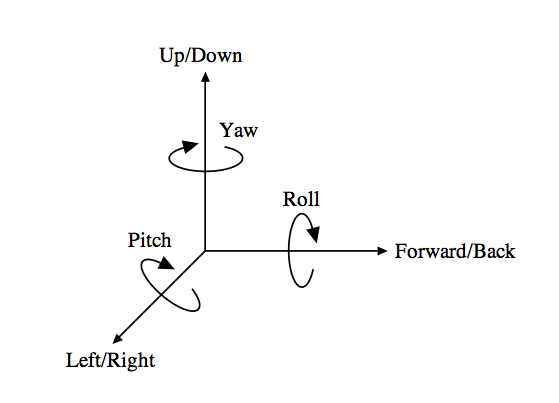
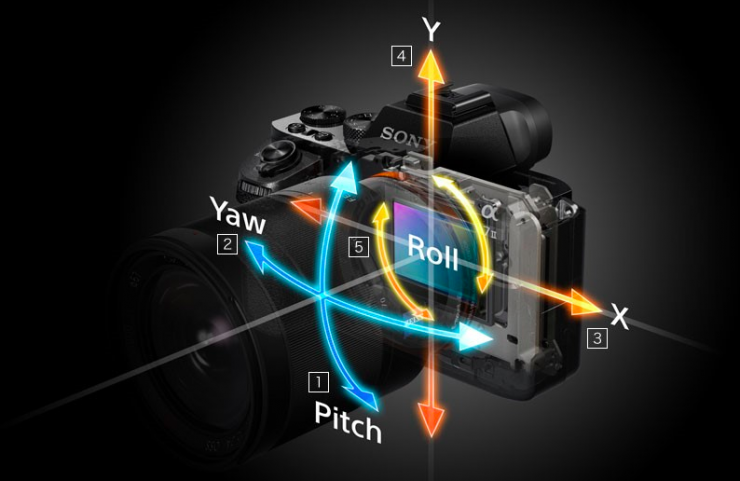
Because cameras are a three-dimensional tool, image stabilization systems need to work on up to six different planes to properly correct camera movement. The most simple camera shake will be directional shake; horizontal, vertical and forward/back shakes. Rotational shake, or commonly referred to as pitch and yaw, control the horizontal and vertical rotational movements that can occur while handholding.


How Lens Image Stabilization Works
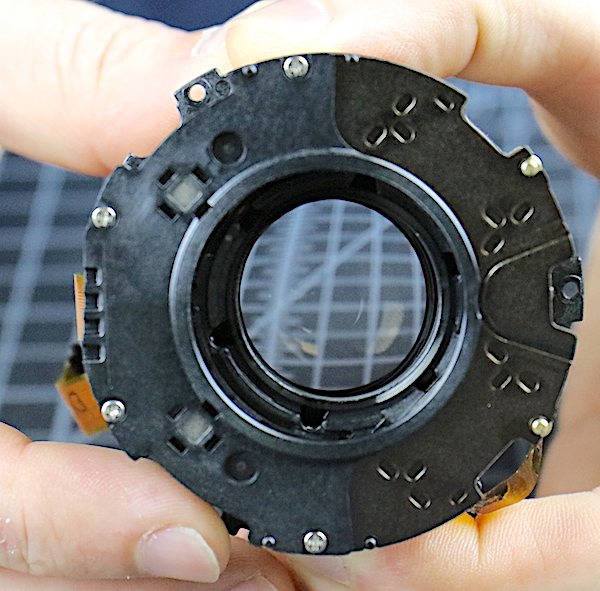
Lensrentals.com, 2018

By default, image stabilization comes in two different flavors – in lens stabilization or in-camera body stabilization. These two platforms work differently, but work to produce similar results. To put it simply, in lens stabilization has a floating lens element which is controlled electronically by a microcomputer and shifts in the opposite direction of the camera shake, helping to stabilize the image. All of this is detected in mere microseconds and can give you up to 5-stops of stabilization, depending on the lens, movement, and focal length. Below is a short diagram showing you how this works to help counteract any camera shake.
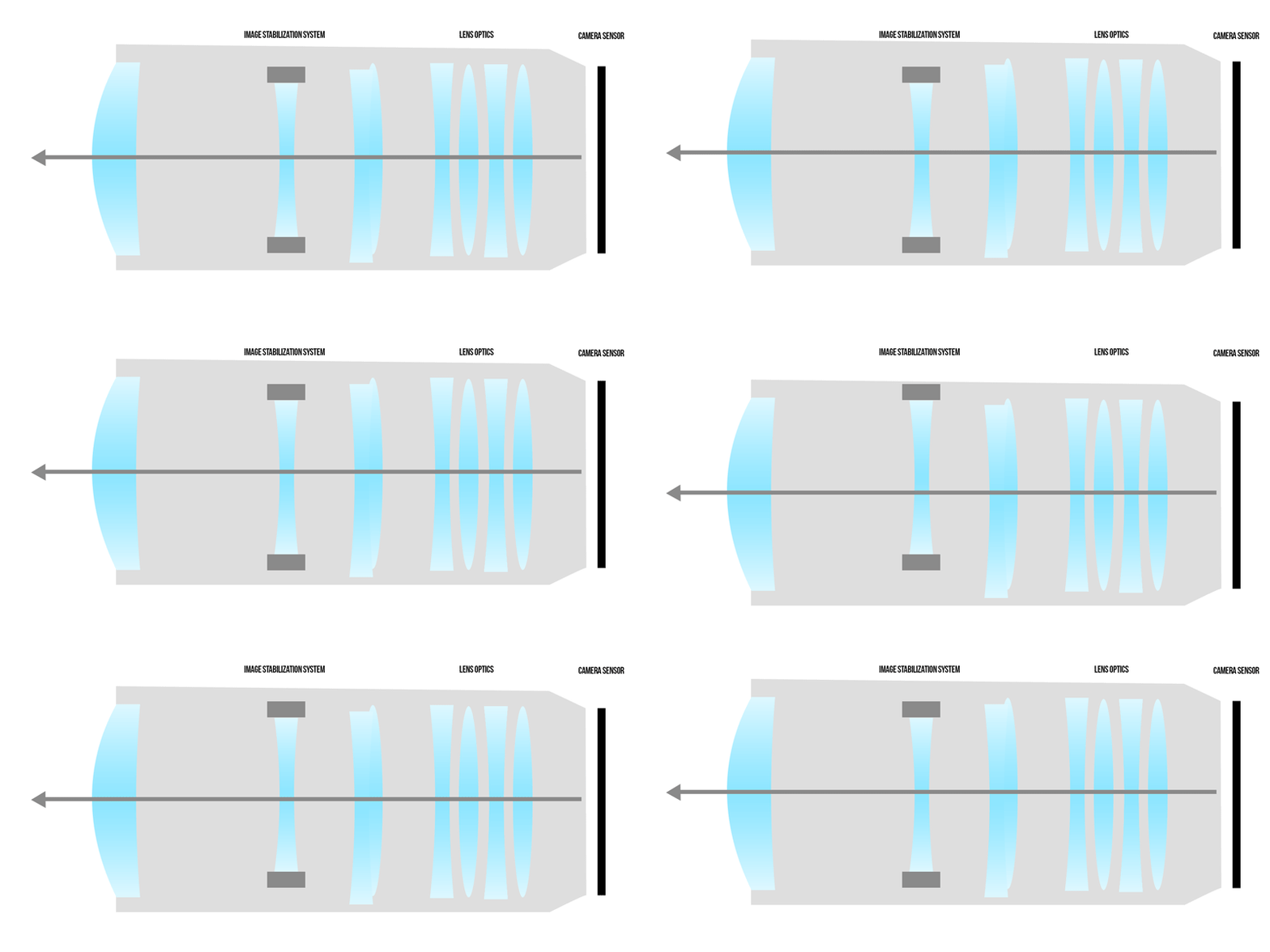
In-lens image stabilization is by far the most common type of stabilization system. However, there is another type of image stabilization system that is becoming more and more popular, commonly called In-Body Image Stabilization (IBIS).

How In-Camera Stabilization Works

In recent years, through the help of Sony and Fuji cameras, In-Body Image Stabilization has become more and more common in cameras. Whereas image stabilization within the lens has a floating lens element helping to counteract the camera’s movement and shake, In-Body Image Stabilization has a floating sensor that helps neutralize any movement within the camera. The key advantage to this system is that if your camera has IBIS, all of the lenses you use with it will also have image stabilization.
Is In-Lens or In-Body Stabilization Better?

A common call we get here at Lensrentals.com is the cut to the chase “Which is better?”. But it’s not as simple as that, as both systems have advantages and disadvantages. For example, in-lens stabilization will generally perform better on longer focal lengths, because camera shake requires more compensation at the pivot point (camera) than it does within the lens. This is why many Sony telephotos still have in-lens stabilization, despite having IBIS on all of their mirrorless systems. So let’s look through some advantages of each system, to determine what works best for you.

Advantages to In-Lens Stabilization

  • It’s far more effective in telephoto lenses. A subtle shake of the camera is pretty drastic when shooting at 500mm, and will naturally be better compensated within the lens rather than the camera body.
  • Lens stabilization works better in low light conditions. Because the IS is working as an independent unit, you’ll have better results with in-lens stabilization while in low light conditions. In-Body Image Stabilization will often have trouble metering and focusing in lower light situations while activated.
  • By in large, In-Lens Stabilization is more effective. While many camera companies developing IBIS will deny this, generally in-lens stabilization will provide better results. This is because the image stabilization is fine-tuned for each lens, and usually offers multiple IS modes depending on the situation. However, with systems like the Sony a7rIII and Sony a7III offering 5 stops of image stabilization, this argument is slowly fading away. 
  • Has no effect on your metering and autofocus. Unlike with IBIS, in-lens IS will have no negative effects to your autofocusing and metering while activated. 
  • By design, In-Lens Stabilization will offer better battery life. In-lens stabilization requires smaller motors to move the optics for camera shake, and is far less draining on the battery when compared to in-body image stabilization.

Advantages to In-Body Stabilization

  • Generally, In-Body Image Stabilization (IBIS) is cheaper in the long run. While IBIS will usually be an added cost to the camera body purchase, it is a one time purchase and will usually result in lower lens prices, when compared to similar lenses with IS built in. 
  • In-Body Stabilization is universal – and works with all lenses. To further the point above, once you have IBIS, you should be able to use image stabilization with all the lenses in your kit.
  • Unlike with most lenses with IS built in, IBIS operates in silence. If you’ve activated image stabilization on a lens, you’ve likely heard clicking and other noises from the lens while focusing. That is (usually at least), the image stabilization system making adjustments. 
  • IBIS offers cleaner bokeh when engaged. With IS turned on for in-lens systems, you’re asking the lens to make optical adjustments to counteract any movement, which can result in some weird bokeh. Because the optics are stationary with IBIS system, you will get a cleaner bokeh.

Misconceptions Regarding Image Stabilization

There are a few misconceptions with image stabilization systems that we need to answer often through tech support calls. So let’s go over a few of them here. 

Can you use both in-lens stabilization and IBIS?

In short, yes. While it is dependent on the camera system you’re using (for example, Panasonic has a list of compatible lenses), but you should be able to use them together. With Sony systems, activating both systems will delegate 3-axis stabilization to the IBIS, and leave the pitch/yaw adjustments for the Optical Steady Shot (O.S.S) in-lens stabilization. Fuji systems, at least the Fujifilm X-H1, work in a similar fashion; delegating specific axis’ to different systems to achieve the standard 5-axis stabilization.

Should I turn off IS before demounting a lens?

As a general practice, yes. If you have Image Stabilization activated on a lens, you’ll want to turn it off, wait three seconds, and then unmount the lens. Not doing this can potentially put the IS system in what we call an ‘unparked’ position, which means the optics are still floating, which could cause damage if shaken and jarred. 

Is there a theoretical limit to image stabilization?

Olympus seems to think the limit is 6.5 stops of image stabilization. In a recent interview, Setsuya Kataoka, part of the Imaging Product Development Division at Olympus, claimed that image stabilization’s theoretical limit is set at 6.5 stops of stabilization, due to rotation of the earth interfering with gyro sensors. I’ll let the comments below determine if that is a scientific fact, or just marketing mumbo jumbo.

Does image stabilization help with fast moving subjects?

No. Image stabilization is designed to control only the movements from camera shake. It won’t help stabilize any blur caused by moving subjects.

The Naming Schemes of Various Image Stabilization Systems

Likely because of patents, each brand has their own naming for their image stabilization, which is why most modern camera lenses have half a dozen letters slapped to the end of their official product name. So here is a quick reference guide for what each major brand calls their image stabilization system.

Lens Brand Image Stabilization Name
Canon IS (Image Stabilization)
Nikon VR (Vibration Reduction)
Sony O.S.S. (Optical Steady Shot)
Panasonic Mega O.I.S. (Mega Optical Image Stabilization)
Power O.I.S. (Power Optical Image Stabilization)
Dual I.S. (Dual Image Stabilization)
Sigma OS (Optical Stabilizer)
Tamron VC (Vibration Compensation)
FujiFilm OIS (Optical Image Stabilization)
Olympus IS (Image Stabilization)


Hopefully, we were able to help with any questions you may have had regarding image stabilization, and if you have additional questions, feel free to chime in in the comments below or give us a call.

Author: Zach Sutton

I’m Zach and I’m the editor and a frequent writer here at Lensrentals.com. I’m also a commercial beauty photographer in Los Angeles, CA, and offer educational workshops on photography and lighting all over North America.

Posted in Geek Articles
  • DP

    > Unlike with most lenses with IS built in, IBIS operates in silence.

    dear, dear… IBIS in some implementations is not noiseless (Fuji X-H1 for example)… LensRentals really needs an technical editor to check articles before posting to prevent such lapses 🙂

  • Sggs

    1 – I use to turn off is when shooting video on a tripoid, but a felow photographer tell me that when using long lenses (500mm or more), the is would reduce vibrations from the floor on tripoid as trucks, cars etc… passes near. My tests gave me mixed results. Have you some experience on that?
    2 – shooting with a A7 R2 and a 24-70 f2.8 I have different resolution on the borders of the image, sometimes very good, some not, same focal length, 24 and f stop, f6.3, and speeds over 1/1000. Can this be caused by the is?

  • I think there is some confusion? I agree with your original post.

    I do astrophotography. I am certainly familiar with the Pentax star tracking system.

    Re: forces associated with Earth’s rotation: look up the Coriolis effect. Yes, it is a “fictitious” force that only appears because we’re in a non-inertial reference frame, but it needs to be taken into account, and it likely is what the Olympus guy was referencing as setting the theoretical limit of IS.

  • asad137

    No, it’s for astrophotography:

    http://www.ricoh-imaging.co.jp/english/photo-life/astro/

    The effects you talk about are completely irrelevant at the timescales in question.

  • Ilya Zakharevich

    @Cicala: Right. So the next generation of cameras would have a small dome rising above the middle of the camera. Wait
!

  • Ilya Zakharevich

    Wrong. There is no force associated to the Earth rotation. Local vertical may be different from what one could “naively” expect?—?this is all.

    However, the stabilizer would try to make the optical axis to be immobile relative to the fixed stars. Because of this, it would rotate with the angular speed 15?/sec relative to the objects about you.

  • A question for Roger or someone else with a technical background: Has any manufacturer published (or has any individual calculated?) a frequency response plot of an IS system? This single plot captures all the relevant performance information for a IS system and would enable easy comparison between systems.

    A frequency response plot has frequency on the X axis and damping (typically expressed in dB) on the Y axis. A perfect IS system would have infinite damping at all frequencies, but a realistic one probably damps low frequencies, has no impact at high frequencies (>100 Hz?), and has an overshoot frequency where the IS actually makes your photos blurrier due to the time lag between sensing and correction. See https://en.wikipedia.org/wiki/Frequency_response for more info.

  • No, the rotation of the Earth causes a small and dynamic “force” which could potentially confuse the gyro sensors that control IS systems. This would be problematic regardless of the shutter speed.

  • I started having PTSD flashbacks to calculating the Coriolis effect in advanced mech physics classes…

    After 1 minute of pondering, I /think/ this could be compensated for with a GPS (to know latitude) and compass (to know pointing).

    A Foucault pendulum is a good option too (I’ll never say no to a Foucault pendulum!), but a few people might complain about the size. :-p

  • “Lens stabilization works better in low light conditions. Because the IS is working as an independent unit, you’ll have better results with in-lens stabilization while in low light conditions. In-Body Image Stabilization will often have trouble metering and focusing in lower light situations while activated.”
    Can you explain this a bit more? I genuinely have no idea what you’re talking about. IS relies on gyro sensors, and those don’t care about light levels.

    “IBIS offers cleaner bokeh when engaged.”
    Although this is true, I think you’re missing a more important point. The lens is designed to have all elements co-aligned, so optical aberrations increase when the lens IS unit departs from its neutral position. This will affect the look of bokeh, yes, but it will also affect things such as corner sharpness. I’ve noticed a reduction in corner sharpness in tripod-mounted images with fast shutter speeds when I left lens IS on. Because of this, I’ve gotten in the habit of turning off my IS whenever I’m shooting with fast shutter speeds.

    “Should I turn off IS before demounting a lens? As a general practice, yes.”
    Does this apply to all systems, or only Sony? Should I still do this if the camera has already been powered off?

  • I’ve heard of this for Sony lenses but never for other systems.
    1) Does this apply to other brands?
    2) Do you need to do this if the camera has already been powered off?

  • Department S

    Rather suprised at having to turn off in-lens and wait before dismounting – can’t imagine anyone ever does that (I don’t)?

    Surely these systems would self-park when powered off? It would seem a design flaw to do otherwise!

    Have you had many occurences of damage?

  • Athanasius Kirchner

    I’ve yet to see such a lofty claim tested and proven. It’s as you say – in my experience, newer IBIS systems outperform in-lens ones handily in a number of tests, especially for very slow exposures at wide angle.

  • Franck MĂ©e

    Alpha 7 II, 2015 actually. 😉
    I think the Alpha 100 and the 3-500 series sold many, many more than the Alpha 7 II, as probably did the K10D. They were much more “mainstream” cameras, below (and sometimes far below) 1000 €.
    The Alpha 7 series were “mainstream for a full-frame”, but not “mainstream” period, in my opinion.

  • Franck MĂ©e

    Well, I wrote “IBIS *can* provide”, so I did say they weren’t necessarily linked. And Zack was referring to an added cost when buying the body, so the production cost is irrelevant.
    Thanks for playing though.

  • Les

    IBIS can be associated with multi-shot, but the two aren’t necessarily linked. Sinar and others have offered multi-shot for over a decade, yet they never offered IBIS. Lots of IBIS cameras don’t offer multi-shot.
    Also, cost and price aren’t the same. IBIS costs something to implement, but that cost isn’t necessarily reflected in selling price. The selling price is mostly determined by marketing. Back in the day, Nikon and Canon would both have full lines of APS SLR that differed only in small details, but the selling price went up in $100 increments.

  • asad137

    Because cameras are a three-dimensional tool, image stabilization
    systems need to work on up to six different planes to properly correct
    camera movement.

    Minor nitpick: There aren’t 6 planes. There are 3 planes and 3 rotational axes. And really, there actually aren’t 3 planes. In the Sony graphic you use, the only planar correction is in the X-Y plane — there is no correction in the Y-Z or X-Z plane, which would shift the focus.

    More accurate would be use Sony’s terminology of 5-axes, not planes (X, Y, pitch, yaw, roll).

  • asad137

    Earth rotation in the context of astrophotography, so extremely long exposures — like 30 seconds or more.

  • I’m sitting here thinking “so they just need to add a tiny Foucault’s pendulum as an IS sensor to take care of that” and laughing myself silly. I truly need to get a life.

  • bedo

    “It’s far more effective in telephoto lenses.”
    “By in large, In-Lens Stabilization is more effective. While many camera companies developing IBIS will deny this, generally in-lens stabilization will provide better results.”

    Zach, do you have links to some relevant studies supporting these claims? Just curious as I only have anecdotal evidence with my own gear where Olympus IBIS outperforms anything else I have (IBIS or optical) by far.

  • Ilya Zakharevich

    Earth rotation? 1 day = 24×60×60 sec = 84,600 sec. With 100mm lens, the sensor moves (relative to the lens) about 100mm*2?/84,600 = 7?m/sec. So with 6œ steps (which is a 100mm lens handheld for 1sec, if I understand it correct), Earth’s rotation contributes a shift of ?1.5pixels.

    I do not know what would be considered as an “acceptable” performance; I would think that in the context of shake, 1.5px would be considered negligible.

    Moreover, even if one know the latitude, the local vertical, and the direction to north only approximately, one can still compensate this to a large extent


  • Ilya Zakharevich

    Thanks, Jesse,
    before your remark this part of the page would not make any sense! Since nowadays IBIS is mostly for mirrorless, I did not even think about DSLR in the context of this section.

    What is desperately needed is to add something like “for DSLR with their separate AF and auto-exposure modules”.

  • No, you haven’t suggested that, but you wrote an article about IBIS, and didn’t even mention one of the companies that pioneered the system more than a decade ago. That’s not insignificant omission. I’m aware both Pentax and Olympus were flying under the radar for most of the working pros until recently, but hey, that’s 12+ years, that’s the company that spearheaded it into existence even in the entry-level cameras, that’s the system used for in-camera shift feature – not something that could be missed by an article written on LensRentals.
    Or maybe my standards are a bit too high. 🙂
    No hard feelings, I’m just trying to fill in the missing information in otherwisely very informative article (Pentax calls it SR – Shake Reduction).

  • I’m not suggesting that Sony or Fuji invented IBIS, just that it has become far more prevalent in recent years thanks to their camera systems. Minolta left the photography space shortly after 2003, and both Pentax and Olympus have been pretty small fish in the camera space (at least until recently). It wasn’t until the Sony a7 in 2014, that IBIS was pushed into the mainstream…

  • In recent years, through the help of Sony and Fuji cameras, In-Body Image Stabilization has become more and more common in cameras.

    There are a few factual mistakes there – Minolta, Pentax and Olympus were using IBIS for years, Minolta started using it in 2003. in enthusiast compacts, every Pentax DSLR had IBIS since 2006. and Olympus started stuffing it in their DSLRs a year later. That’s three major companies missing on the list, all three using the system more than a decade ago – in my book, that’s not really “recent years” anymore.

  • Franck MĂ©e

    Hey Zach,
    I’m sorry to be the grumpy one here, but I think your article misses a few points.

    There is an important advantage to IBIS that you didn’t write about: it can be used for something else.
    While OIS is limited to its core function, IBIS can provide “super-resolution” solutions (multi-shot/pixel shift resolution/high resolution/
), automatic horizon alignment, switchable anti-aliasing, minute framing adjustment if your tripod lacks micro-metric controls, sky following for night photography, and maybe other things I haven’t heard about.

    And please stop saying IBIS is “usually an added cost” for the body: I haven’t seen an IBIS body being notably more expansive than a non-IBIS equivalent since the K100D vs K110D. 🙂

    The Alpha 100 was cheaper than the EOS 40D, the K-1 was the same price as the D750 and cheaper than the D800 (depending on whether you want the 1/8000 s shutter and 36 Mpx for a “fair comparison”), the OM-D E-M10 was cheaper than the Alpha 6000 and the X-M1


  • I’m not sure if it’s a requirement anymore, but if mounted to a tripod, there isn’t really much use for IS anyway, as you should have very little camera shake to begin with. The same reasoning would apply to the second question. If you’re shooting at very high shutter speeds, you’ll probably be best to have IS/IBIS off, to avoid any miscalculations within the system. Though IS systems are generally really accurate, they sometimes are not…so in these situations where you’re either mounted to a stationary object or shooting at fast speeds, I’d take IS out of the equation entirely to avoid any errors.

    Thanks for reading!

  • DV

    Lens stabilization works better in low light conditions. Because the IS is working as an independent unit, you’ll have better results with in-lens stabilization while in low light conditions. In-Body Image Stabilization will often have trouble metering and focusing in lower light situations while activated.

    I’ve been using A-mount cameras with IBIS since the Maxxum 5D to now with the a99ii and this has never been a problem. I’ve used IBIS in the dark and it has never affected my metering, exposure, or focus.

    Now, what WAS a problem with IBIS only systems is that in SLRs the viewfinder image was not stable, because obvious reasons. Having an unstable viewfinder can definitely hurt framing or the ability to keep your focus point over the image. With EVF systems, this is no longer the case: we now have stabilized viewfinders because the platens move during half-press. The Minolta A series digicams could also do this. The first round of Sony SLTs couldn’t, because the system was too inefficient (and on the a77ii could affect image quality because it wasn’t fast enough). The five-axis system in the a99ii (and in the a7 series cameras) corrected this problem with its far more efficient setup.

  • cedyathome

    Thanks for the explanations. I have a few questions:
    – Older IS systems required you to shut them off when using a tripod. Is that still true of newer systems like the Sony one?
    – Should IS or IBIS be turned off when using high shutter speeds (say 1/1000 or faster)?
    I also assume that shooting with a camera mounted on a tripod will always best using IS or IBIS. Is that a true assumption?
    Thank you.

  • Jesse H

    For the metering impact of IBIS, is this only a factor in SLR style cameras with separate AF and metering sensors? If metering and AF is off of the main sensor then it shouldn’t matter as much? Similarly only optical IS will stabilize the viewfinder in a SLR with optical view finder but in mirrorless either type should work.

Follow on Feedly