Equipment
Then & Now: A Look At Top Products From Over the Years

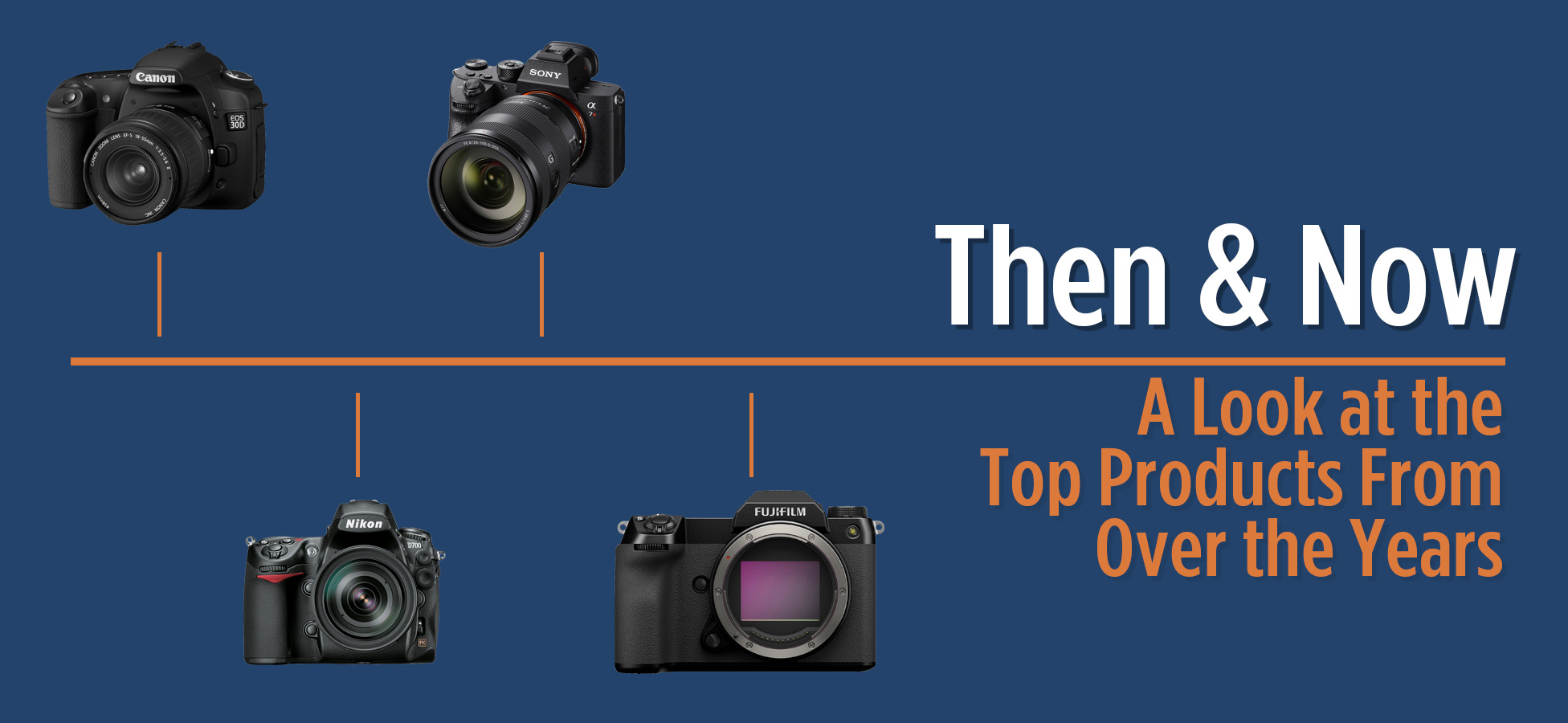
As you learned last week through emails and the previous blog post, Lensrentals.com turns 19 years old this month, which is undoubtedly a cause for celebration. What started as Roger renting out his camera lenses to friends has turned into a massive rental house, while still maintaining its family roots and dedication. Nineteen years is important to me personally as well, as around the time Lensrentals was officially formed, I was starting my career as a professional photographer and looking to upgrade my camera gear to the digital era. An unbelievable amount of changes have occurred in this industry over the past 19 years, so I wanted to examine some of the gear we used 19 years ago and compare it to the gear commonly used today.
So let’s go back to 2006 – George W. Bush is the President, the Motorola RAZR is the number one phone in America, and MySpace is still the most popular social media platform, with Facebook still being invite-only for colleges. And in a garage in Memphis, Tennessee, Roger Cicala is organizing his personal camera gear, as he has found a small market for renting out lenses to his photography friends.
The data we had in the early days isn’t nearly as comprehensive and organized as the system we have in place now, but we can take a walk down memory lane to discuss some of the most popular gear from 2006, when Lensrentals.com was first forming. Back in 2006, DSLRs were still making their way into the market. For Canon, they were promoting the Canon 30D – an 8.2-megapixel DSLR with a 1.6x crop sensor. On the full-frame and flagship side, Canon’s 5D, released six months earlier, was a 12.7-megapixel full-frame camera priced at $3,299 without a lens. On the other hand, with Nikon (Sony was not yet a player in 2006), Nikon’s players included the newly released Nikon D40, an APS-C camera with 6.1 megapixels. Additionally, Nikon’s flagship at the time was the Nikon D2X, a 12.4 megapixel camera with a crop sensor. That’s right, Nikon hadn’t yet introduced a full-frame digital sensor, and wouldn’t until a year later with the Nikon D3.
During this same time, the trend in photography was all things HDR. Cameras had just started implementing this feature into their cameras, so the entire pro-amateur market was flooded with over-processed and crunchy images. I’ll spare you examples, but a quick look through Flickr shows you how overprocessed it was. 2006 also marked the start of the megapixel race. As a marketing moniker, megapixels were known to many as an indication of camera quality, and this race continued for at least another decade, as each camera stretched its sensors’ capability of resolution, while ignoring more important indicators like low-light performance, autofocus capabilities, and dynamic range.
The following year, Canon introduced the Canon XTi (also known as the Canon 400D), which featured a much smaller form factor than their previous cameras and was a direct competitor to the Nikon D40. In 2007, Canon also introduced the Canon 40D (confusing, I know), which was a groundbreaking camera for its feature set compared to the price point. However, the big marking year from this era was the following year. In 2008, Canon introduced the Canon 5D Mark II, the first DSLR to implement video functionality—a standard in all cameras today. The feature was groundbreaking for the time, and garnered the interest of cinematographers and photographers alike. In fact, an episode of the medical drama House was shot entirely on the Canon 5D Mark II, an impressive feat considering the camera came with no autofocus capabilities when shooting video.
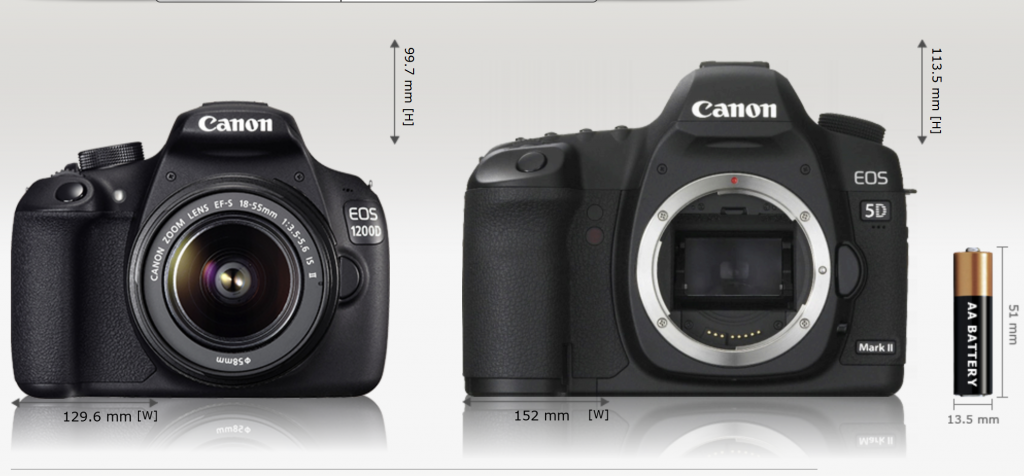
At this time, Sony was experimenting with DSLRs but wasn’t making significant progress, despite their robust feature sets. At the time, the Minolta A-mount had limited lens options available for the Sony market, and it was unable to compete with the two major players, Canon and Nikon. However, the tides began to shift in 2012, when Sony introduced the first professional mirrorless camera to the world, with the Sony a7.
The Sony a7 was equipped with a brand-new lens mount, and Sony was particularly aggressive in developing lenses for the Sony E-Mount lens platform. Whereas many camera manufacturers were replacing their flagship models every 5 years or so, Sony implemented a more aggressive development cycle, replacing their cameras in a two-year cycle, an approach that we still feel the effects of today. At this same time, Lensrentals had found their footing, renting out all these cameras and more, while Roger was disassembling the broken gear returned to us and documenting the process here on this very blog.
Still, the amount of data we were receiving at the time wasn’t made publicly available until around 2016, when we went through that data and shared it with our readers in an article titled ‘The Best and Most Rented Photography Gear of 2016‘, which started an annual series for us. Let’s take a look at some of the most popular gear from 2016.
In 2016, we were still in the era where Canon was really dominating the lists, and Sony was still trying to find its footing in the photography world. Nikon was still quite popular among working professionals, and Fujifilm was starting to capitalize on the smaller CMOS sensor cameras with the X-T2 and X-Pro2. We conducted this data mining each year thereafter, and you can review our numbers from 2017 or 2018. However, let’s move on to 2019.
By 2019, Sony was gaining ground on Nikon, and Sigma was establishing its name in the industry as a great lens alternative to the established brands like Canon, Nikon, and Sony. However, Canon and Nikon had not yet adopted a standard mirrorless platform, still opting for DSLR options as their staples. The year prior, Canon had introduced the Canon EOS R, and Nikon had introduced the Nikon Z7 and Z6; however, neither had really gained significant traction at this point. The industry viewed them more as proof of concept than actual competitors. The next few years changed considerably, though, as both Nikon and Canon began discontinuing their EF and F-mount lenses and cameras, and going full steam ahead with their mirrorless platforms. Let’s jump to 2022 to see how these numbers compare.
| 1 | Canon EOS R5 | 11 | Sony Alpha a7 IV |
| 2 | Canon EOS R6 | 12 | Canon RF 24-70mm f/2.8L IS |
| 3 | Sony Alpha a7S III | 13 | Sony FE 24-70mm f/2.8 GM |
| 4 | Canon EOS C70 Cinema Camera (RF) | 14 | Sony FX6 Full-Frame Cinema Camera |
| 5 | Canon RF 70-200mm f/2.8L IS | 15 | Canon RF 28-70mm f/2L |
| 6 | Sony FE 70-200mm f/2.8 GM OSS | 16 | Sony PXW-FX9 XDCAM 6K Full-Frame Camera |
| 7 | Canon 24-70mm f/2.8L II | 17 | Sony Alpha a7 III |
| 8 | Canon 5D Mark IV | 18 | Sony FE 70-200mm f/2.8 GM OSS II |
| 9 | Sony FX3 Full-Frame Cinema Camera | 19 | RED KOMODO 6K |
| 10 | Canon 70-200mm f/2.8L IS III | 20 | Canon RF 100-500mm f/4.5-7.1L IS USM |
By 2022, the mirrorless world had finally started to take hold, and this top 20 isn’t all that different than what you might see today. The Canon R5 is the top camera rental in our inventory, and the DSLR market has been slowly falling down the ranks as people migrate to the newer platform. Also, by this time, Sony had taken over Nikon as the number 2 camera brand we rent, and Sigma had started to disappear again, as Canon had still really locked down their development for the RF lens mount at this point.
As it stands today, the changes have come far more subtly. Mirrorless cameras remain the market leader in terms of market share, and Fuji has transitioned from producing exclusively crop sensor cameras to expanding into medium format platforms. This is just a taste of what has changed over the last 19 years in the industry, but I hope the walk down memory lane was fun for you. In the previous 19 years, what was your favorite piece of equipment? Feel free to chime in using the comments section below.

Author: Zach Sutton
I’m Zach and I’m the editor and a frequent writer here at Lensrentals.com. I’m also a commercial beauty photographer in Los Angeles, CA, and offer educational workshops on photography and lighting all over North America.-
Masque
-
Masque
-
Ed Dozier
